Elevaya journal
Lift and Elevator Supply in the UAE: A Buyer's Guide to Specs, Quotes and Compliance
Compare UAE elevator supply and installation proposals: specifications, builder’s work, commissioning, warranty, spare parts and maintenance handover.
Published · Updated · Elevaya Lifts
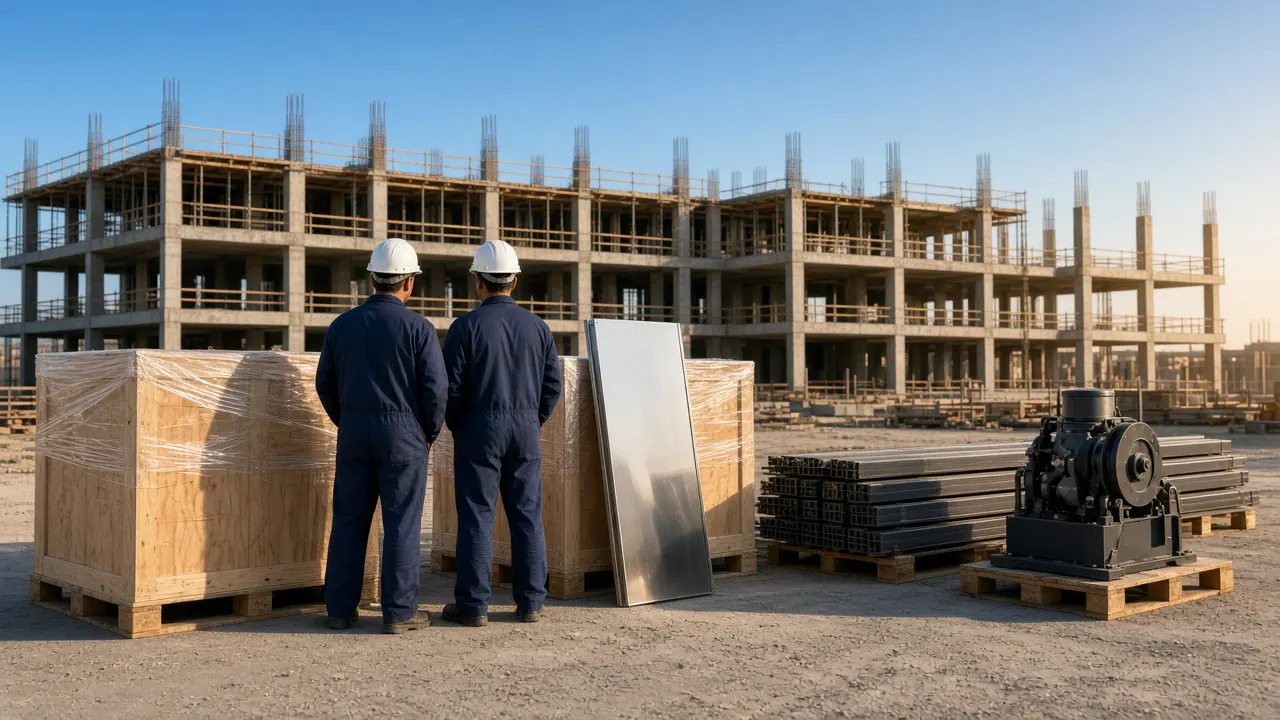
Quick answer: Lift supply in the UAE means buying the lift equipment itself (machine, controller, guide rails, car, doors, panels, cables and safety components) from a supplier, either as supply-only, where another contractor installs it, or as supply and installation, where one company delivers, installs, tests and hands over a working lift. Before you compare quotes, write a short specification: lift type (MRL traction, hydraulic, home or platform lift, panoramic), rated load, speed, number of stops, door type and size, finishes and the COP/LOP panels. A complete supply quote should then list the exact scope, the standard the lift is built to (the Dubai Building Code requires one suite, BS EN 81 or ASME A17, for the whole project), the documents and certificates you will receive, the warranty and what voids it, spare parts support, the factors that drive the lead time, and who is responsible for delivery, unloading, storage and protection on site. In Dubai, lifts must also be tested and certified by a third party accredited by EIAC, so make sure the quote says who prepares for and attends that inspection.
Buying a lift is not like buying an air conditioning unit. Two quotes for "a 4-stop passenger lift" can describe very different machines, with different standards, documents, warranty terms and spare parts support behind them. The difference often only shows up after handover, when a part is needed or an inspector asks for a certificate that nobody supplied.
This buyer's guide explains lift supply in the UAE from the client's side: when supply-only makes sense and when it does not, what to put in a lift specification, what a supply quote should include, which standards and certificates apply in Dubai, what changes for escalators and moving walkways, and the red flags to watch for. It does not repeat the installation stages on site; for those, read our step-by-step lift installation process in Dubai.
Elevaya Lifts has worked in the UAE since 2019 on more than 200 projects, covering lift design, supply, installation and annual maintenance contracts (AMC). We also service all lift brands, including Otis, KONE and Schindler, and lifts we did not install, so we see what happens to lift supply decisions years after the crates are opened.
What does "lift supply" actually include in the UAE?
Lift supply is the equipment package: everything that becomes part of the finished lift, delivered to site, but not the labour to install it unless the contract says so. In a typical electric traction lift, that package includes:
- the machine (gearless motor and sheave) and its brake, or the power unit, cylinder and valve block on a hydraulic lift;
- the controller and drive, usually a variable voltage variable frequency (VVVF) drive on traction lifts;
- car and counterweight guide rails, brackets and fixings;
- the car frame, platform, safety gear, car walls, ceiling and car door;
- landing doors, frames and sills for every floor;
- ropes or belts, the overspeed governor, buffers and pit equipment;
- the car operating panel (COP), landing operating panels (LOPs) and position indicators;
- the travelling cable, shaft wiring and any remote alarm or intercom equipment.
What is often not included, unless written into the quote, is just as important: builder's works in the shaft, scaffolding, power supply to the machine or controller isolator, machine room or shaft ventilation, cutting and making good around landing doors, cladding around the door frames, the final floor finishes at the landing, and the third-party inspection fee.
Supply-only vs supply and installation: which should you choose?
For most villa owners and small buildings in Dubai, supply and installation by one company is the safer choice; supply-only suits projects that already have a qualified, experienced lift installer and a consultant who can manage the interface. The key question is simple: if the lift does not work properly after installation, who is responsible?
| Supply-only | Supply and installation | |
|---|---|---|
| What you buy | Equipment delivered to site | A working, tested and handed-over lift |
| Who installs | A separate installer you appoint | The same company that supplied the lift |
| Responsibility for ride quality and faults | Split between supplier and installer | One company |
| Warranty | Often covers material defects only, and may depend on who installed it | Usually covers equipment and installation workmanship |
| Testing and certification support | Must be agreed separately | Normally part of the scope |
| Best suited to | Contractors with lift-qualified teams, large projects with a VT consultant, like-for-like replacement components | Villas, homes, residential and commercial buildings that want one point of responsibility |
Supply-only can look cheaper on paper, but the costs that are not in the quote (installation labour, commissioning tools and software, adjustment, test weights, inspection preparation and rectifying defects) usually land on the client or the main contractor. If you choose supply-only, ask the supplier in writing whether the warranty still applies when another company installs the equipment, and whether they will provide commissioning support, wiring diagrams and controller access to that installer.
Elevaya offers lift supply and installation in Dubai and across the UAE, so the company that specifies the lift is also responsible for making it work.
What should you specify before asking for a lift supply quote?
A good specification makes quotes comparable. Without one, each supplier quotes its own assumptions and you end up comparing different lifts. Before you ask anyone for a price, write down the following.
Lift type
- MRL traction lift (machine-room-less): the machine sits in the shaft, so no separate machine room is needed. A common choice for residential and commercial buildings. See traction and MRL lifts.
- Hydraulic lift: driven by a cylinder and power unit; often considered for low-rise buildings and villas with few stops. See hydraulic lifts.
- Home lift or platform lift: compact lifts designed for villas and low-traffic use, sometimes with reduced pit and headroom. See home and villa lifts and platform and accessibility lifts.
- Panoramic or glass lift: a glass car, and sometimes a glass shaft, for atriums, villas and facades. See panoramic lifts and our glass villa lift guide.
- Goods, service, bed or car lifts, which follow different design routes and need a separate brief.
If you are not sure which type fits your building, our guide to lift types for UAE homes and buildings compares them.
Performance and size
- Rated load (capacity) in kg and the number of persons, as shown on the car's load plate.
- Rated speed in m/s, matched to the travel height and traffic. Our guide to lift speed by building height in Dubai explains how this is worked out.
- Number of stops and entrances, including whether any floor needs a rear or side entrance (through-car or adjacent doors).
- Travel height, pit depth and headroom, taken from the drawings and confirmed by a site survey.
- Car size and door clear opening, especially where wheelchair users, stretchers, furniture or goods need to fit.
Doors
- Centre-opening or side-opening (telescopic) doors, and the door width and height.
- Automatic car and landing doors, or a manual swing landing door on some home lifts.
- Finish of landing doors on each floor (painted, stainless steel, mirror, glass), and any fire rating the landing doors need in your building. The Dubai Building Code lists BS EN 81-58, the landing door fire resistance test, among its lift references.
Finishes and panels
- Car walls, ceiling, lighting, floor, handrail and mirror. Heavy finishes such as stone add weight and must be included in the load calculation; see luxury elevator interiors.
- The COP (car operating panel) and LOPs (landing operating panels): button type, Braille, displays, intercom and key switches. Our COP and LOP panels guide covers the code rules.
Features and use
- Automatic rescue device for power cuts, remote alarm and intercom, firefighter or fire recall functions where required, access control, and energy-saving features.
- How the lift will be used: number of residents, peak times, goods or deliveries, and any hospital, hotel or public-building requirements.
What should a lift supply quote include?
A complete lift supply quote should let you check, line by line, exactly what you are buying, what standard it meets, what paperwork comes with it and who is responsible for each step until handover. Use this list when you compare quotes.
1. Scope of supply
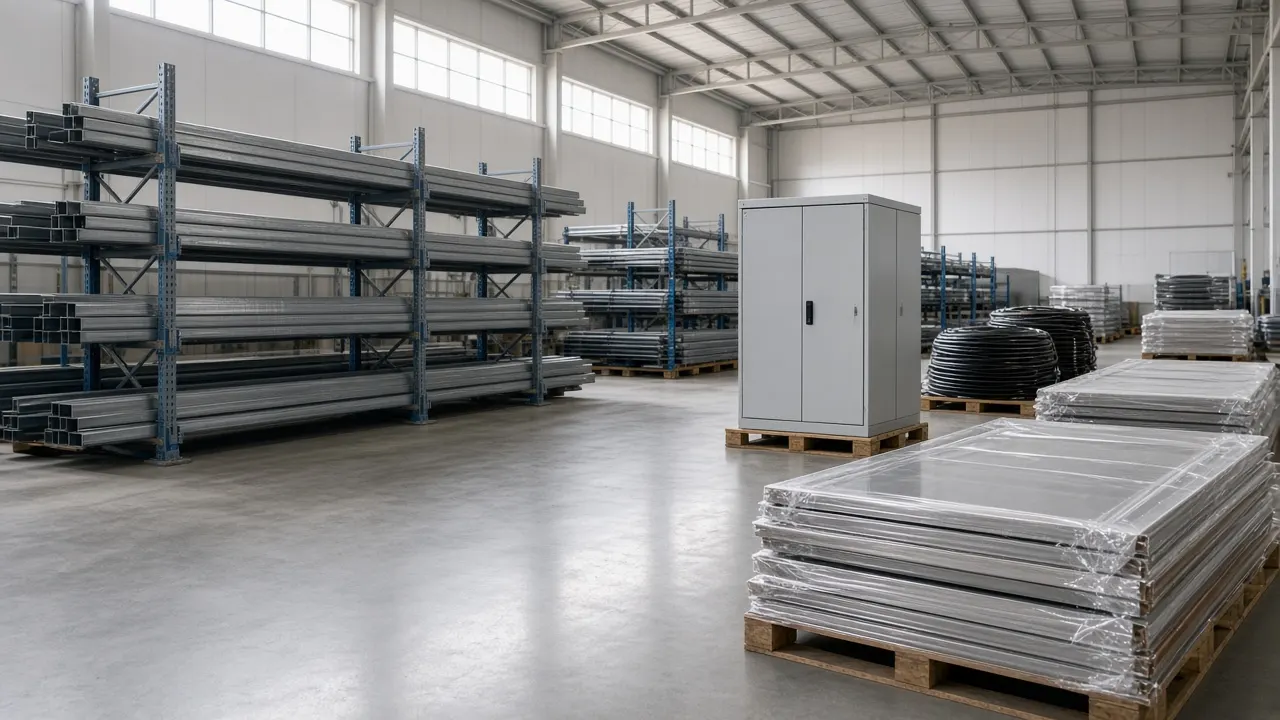
An itemised list of equipment and quantities, matching your specification: lift type, rated load, speed, stops, entrances, door type and size, car finishes, COP/LOP design and the features included. Anything marked "optional" or "by others" should be listed clearly, not hidden in the small print.
2. Standards conformity
Which standard the lift is designed and built to. In Dubai, the Dubai Building Code (Part D, D.5) requires vertical transportation to be designed, installed, tested, commissioned and maintained to one of two suites of standards: the ASME A17 suite or the BS EN 81 suite. One suite is selected for a project, and the two must not be used interchangeably. For a typical EN-based passenger lift, that means BS EN 81-20 (construction and installation of passenger and goods passenger lifts) and BS EN 81-50 (design rules, calculations, examinations and tests of lift components). The code's reference list also includes, among others, BS EN 81-28 (remote alarm), BS EN 81-41 (vertical lifting platforms), BS EN 81-70 (accessibility), BS EN 81-72 (firefighters lifts) and BS EN 81-73 (behaviour of lifts in the event of fire). For villas, section K.5.5.4 of the code states that if elevators are provided, their design shall conform to D.5 and D.6.
Ask the supplier to state the standard in the quote and to confirm it in the conformity documents, not just verbally.
3. Documents and certificates
The quote should list the documents you will receive, for example:
- conformity or type-examination certificates for the lift and its key safety components (such as safety gear, overspeed governor, buffers, door locks and, where applicable, the rupture valve on hydraulic lifts);
- layout drawings and the final approved shaft drawing;
- wiring diagrams and the controller documentation;
- the test and commissioning records;
- the operation and maintenance manual, and the rescue procedure;
- the load plate and the information the inspector will ask to see.
Without these documents, a third-party inspection, a future repair or a change of maintenance company becomes much harder.
4. Warranty
What the warranty covers (materials, workmanship or both), when it starts (delivery, installation or handover), how long it runs, and what can void it: for example, installation by others, maintenance by an unqualified company or unauthorised changes. Our elevator warranty guide explains what to check. Ask whether maintenance during the warranty period is included or must be bought separately.
5. Spare parts and support
How spare parts will be supplied after handover, whether the controller and drive need proprietary tools or software for fault-finding, and whether the supplier will share passwords and diagnostic access with the building's maintenance company. This matters most if you may want to change maintenance provider later. See our elevator spare parts guide.
6. Lead time and the factors behind it
A delivery period stated in writing, and the conditions that trigger it. Lead time depends on the lift type, how standard or bespoke the car and finishes are, approval of drawings and final shaft measurements, the manufacturer's schedule, shipping and customs. Late changes to finishes or door sizes typically push delivery back. Our installation guide covers how supply timing fits the overall programme.
7. Delivery, storage and handling on site
Who unloads the equipment, who provides lifting equipment for heavy items such as the machine, where it is stored, and who is responsible for damage or loss between delivery and installation. In the UAE climate, controllers, cables, door panels and finishes should be kept dry, shaded, off the ground and in their packing until they are needed. Record the delivery against the packing list on the day, so missing or damaged items are reported straight away.
8. Testing, inspection and handover
Who carries out testing and commissioning, who prepares the lift for the third-party inspection, who pays the inspection fee, and what happens if the inspector finds defects.
9. Payment terms and exclusions
Payment milestones tied to clear events (order, delivery, installation, handover), and a full list of exclusions, so builder's works and electrical works are not discovered later as extras.
What compliance rules apply to lift supply in Dubai?
In Dubai, the lift you buy must meet the standard chosen under the Dubai Building Code, and once it is in use it must be tested and certified by an EIAC-accredited third party. The supplier, installer and owner all have a part to play.
- Dubai Building Code, Part D. D.5 sets the "one suite of standards" rule described above. D.6 adds energy-saving controls for lifts in new buildings: traction lifts shall include AC variable voltage and variable frequency (VVVF) drives, energy-efficient lighting that switches off when the lift has been inactive for a maximum of 5 minutes, and a standby condition for off-peak periods. Check that your quote includes these features where they apply.
- Dubai Municipality guideline DM-HSD-GU48. The Technical Guidelines for Examination and Certification of Cranes, Hoists, Lifts and Other Lifting Equipment (DM-HSD-GU48-ECLA2, V5.0) require lifts used in workplaces, hotels and other establishments in Dubai to be tested and certified by a third party accredited by the Emirates International Accreditation Centre (EIAC) once every 12 months. The accredited third party issues a certificate of safety only after examination and testing and after any repairs have been carried out, and the compliance certificate must be kept at the site.
- EIAC requirements for inspection bodies. EIAC-RQ-IB-002 defines the inspections that accredited bodies carry out, including the initial inspection after production for commissioning purposes, periodic inspections, and major inspections after a major repair or when equipment is upgraded or modified. An inspection certificate shows the equipment complies and is fit for use; an inspection report explains why it failed.
For a new lift, this means the documents in the supply package are not paperwork for the file. They are what the inspection body will check. Our lift inspection and testing guide and inspection preparation service explain the process.
Home lift supplier in Dubai: what is different for villas?
For a villa, the supply decision is usually driven by space, the number of stops, the look of the lift and how easy it will be to maintain, more than by traffic. Points to check with a home lift supplier in Dubai:
- whether the lift is a full passenger lift or a platform-type home lift, and which standard it is built to;
- pit depth, headroom and shaft size needed, and whether the design suits an existing villa or only a new build (see adding a home lift to an existing villa);
- the power supply required, and whether a rescue device is included for power cuts;
- door type (automatic or manual), and the finish on each floor to match the interior;
- whether glass, if used, is laminated safety glass and how solar heat in the car will be managed;
- access to the equipment for maintenance once the villa is finished and furnished;
- who will maintain the lift after the warranty period, and whether parts are available locally.
Escalator and moving walkway supply in the UAE
Escalator and moving walkway supply is a heavier, more logistics-driven project than lift supply, and it needs its own specification and delivery plan.
- Standard. The Dubai Building Code lists BS EN 115-1 (safety of escalators and moving walks, construction and installation) in its references, and the ASME A17.1 code covers escalators and moving walks in the ASME suite. As with lifts, one suite applies to the project.
- Specification. Rise, inclination, step width, speed, balustrade type (glass or solid), indoor or outdoor duty, and the traffic expected. Our escalator design guide for UAE malls covers these choices.
- Energy features. For new buildings, Dubai Building Code D.6.2 requires reduced speed when no activity has been detected for a maximum of 3 minutes, and shutdown on demand when no activity has been detected for a maximum of 15 minutes, with soft-start, and photocell detectors at the top and bottom landings.
- Handrail protection. D.5 requires enhanced handrail protection at the entry to escalators and moving walks.
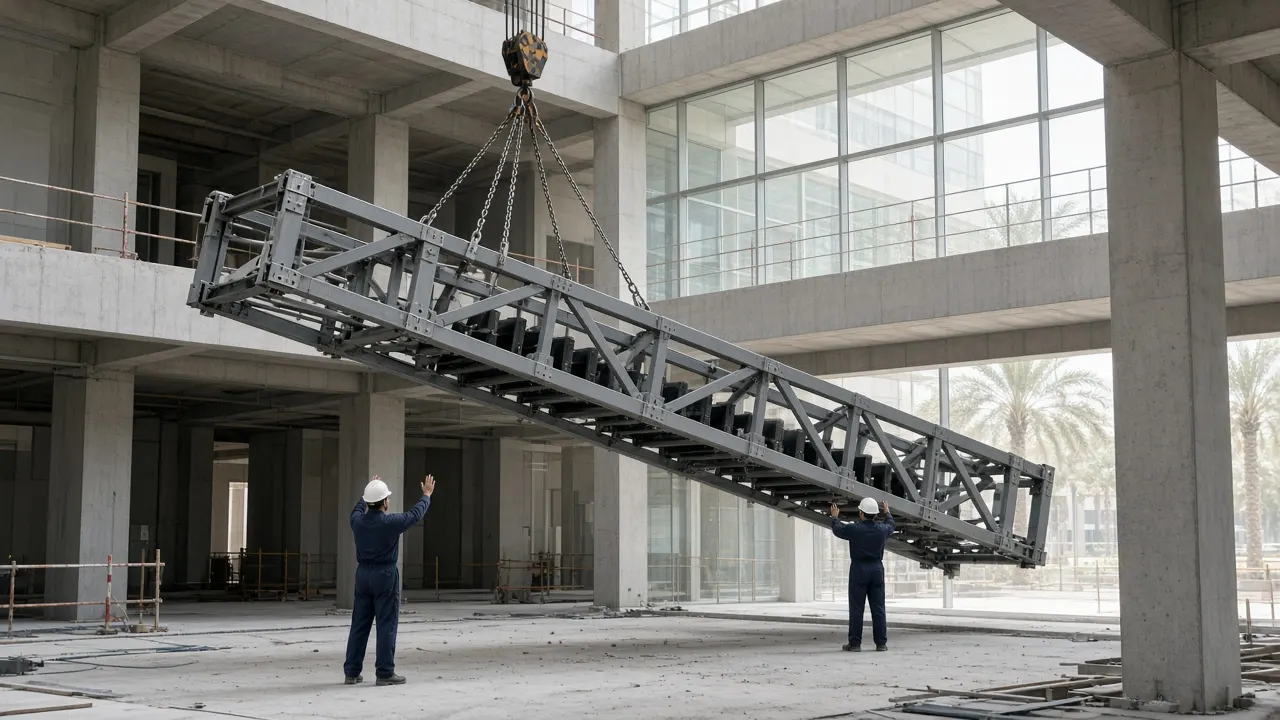
- Delivery. The truss usually arrives in one piece or a few large sections. The delivery route, crane access, temporary openings, support points and the timing against the building programme must be planned well before the delivery date.
- After handover. Sand, dust and heavy use in malls make maintenance and spare parts support as important as the supply price. See escalators, moving walkways and our escalator maintenance and repair service.
What happens after handover: multi-brand spare parts and AMC
The day a lift is handed over is the start of its working life, not the end of the supply project. From that day it needs regular maintenance and, in Dubai, annual third-party certification.
Points to plan before you sign the supply contract:
- Who will maintain the lift during and after the warranty period, and what the AMC covers. As a reference point, Elevaya's non-comprehensive AMC for a G+1 villa lift in Dubai starts from AED 2,500 a year and includes 12 visits (one a month), fixes for issues found and free 24-hour emergency callouts at no extra cost; only replacement parts are charged, and only when they need changing. See our villa lift AMC cost guide.
- Spare parts availability for the specific brand and controller.
- Freedom to choose your maintenance company. Elevaya maintains all lift brands, including lifts installed by other companies, so you are not locked in to the original supplier. See multi-brand lift maintenance and our spare parts service.
Red flags in a lift supply quote
Be cautious if a lift supply quote has any of the following:
- a single lump-sum price with no itemised scope, model or specification;
- no standard stated, or a mix of ASME and EN references in the same offer;
- no list of certificates or documents, or "documents available on request";
- a warranty that starts on delivery rather than handover, or that is void if anyone else maintains the lift;
- no mention of who prepares for and attends the third-party inspection;
- a controller that needs proprietary tools, with no commitment to share diagnostic access;
- no clear responsibility for unloading, storage and damage on site;
- a lead time promised before the shaft has been surveyed or the drawings approved;
- a price that is much lower than the others because items such as landing doors, panels or the rescue device are "by others";
- pressure to pay most of the price before delivery, with no link to milestones.
For a wider checklist on choosing a supplier, read how to choose the best lift company in Dubai.
How Elevaya handles lift supply
Elevaya Lifts handles lift design, supply, installation and AMC for villas, residential and commercial buildings across the UAE. On a supply project we survey the site or review the drawings, help you write the specification, quote an itemised scope with the standard and documents stated, coordinate delivery to suit site readiness, and, where we install, test and prepare the lift for third-party inspection before handover. After handover, we can maintain the lift, and we service all brands if you already have lifts from other suppliers. You can also review our completed projects.
Related Elevaya guides
Continue planning with these related Elevaya guides:
- Lift installation in Dubai: step-by-step process: survey, shaft, pit and headroom prep, supply and delivery, installation sequence, testing, EIAC certification and handover.
- How to choose the best lift company in Dubai: buyer's checklist: licences, AMC terms, written response times, parts, references and red flags.
- Glass villa lift in Dubai: footprint, heat and cost factors: shaft vs shaftless, laminated glass, cabin cooling, hydraulic vs MRL vs platform.
- Glass and panoramic villa lifts in Dubai: 2026 planning guide: placement, glazing, heat control, approvals and AMC care.
- Lift COP and LOP panels in Dubai: what is on each panel, DBC button heights, Braille and intercom rules, common faults, repair vs replacement.
- Elevator AMC cost in Dubai: villa owners' guide: non-comprehensive from AED 2,500 for G+1, visits, callouts and parts rules.
- Lift speed by building height in Dubai towers: DBC travel-time formula, worked m/s examples, waiting times, DHA hospital and Trakhees rules.
- Elevator and escalator speeds in UAE buildings: rated lift speed by travel height and 0.5 vs 0.65 m/s escalators.
- Escalator design and maintenance for UAE malls: layout, balustrades, dust and heat, AMC and modernization.
- Escalator faults and repairs in Dubai: why escalators stop, safety-device trips, handrail and step chain wear, sand and heat, repair vs modernization.
- Elevator modernization in Dubai: signs, scope and standards: when to modernize, controller and door upgrades, EN 81-20/80, downtime and cost factors.
- Lift upgrades in Dubai: what to upgrade first: rescue devices for power cuts, door light curtains, VVVF and energy saving, cabin refresh, alarms, EN 81-80, upgrade vs modernization.
- Common lift problems in Dubai: causes and fixes: stuck lifts, doors not closing, jerky rides, noise and summer heat trips, safe owner checks, trapped-passenger steps, repairs and certification.
- Lift maintenance checklist for Dubai: monthly service visit: what each monthly visit should check on doors, ride, machine and brake, alarm, car top and pit, the log book, maintenance vs inspection, villa lifts and an escalator checklist.
- Elevator cabin design trends in the UAE for 2026: finishes, COP/LOP panels, LED lighting and glass cabins.
- Luxury elevator interiors in the UAE: marble, bronze and wood: weight, fire performance and cleaning of premium cabin finishes.
- Export lifts and elevator spare parts from the UAE: export documents, HS codes 8428 and 8431.31, Dubai Chambers certificate of origin fees and the steps from enquiry to shipment.
- Escalator modernization in the UAE: signs, scope and compliance: when to modernize, modernize vs replace, controller and drive, steps, chain and handrail, energy features, phased mall works and the EIAC major inspection.
- Escalator installation in the UAE: step-by-step process: survey and selection, pit and truss supports, rigging, alignment, controller, safety devices, testing, EIAC inspection and handover.
Related Elevaya services and guides: Lift supply and installation, Lift types for UAE homes and buildings, Lift installation cost guide, Elevator warranty guide, Elevator spare parts, Inspection preparation, Lift maintenance and AMC, Elevator shaft and MRL planning.
FAQ
What is the difference between supply-only and supply and installation for a lift?
Supply-only means the supplier delivers the lift equipment to site and another contractor installs it. Supply and installation means one company delivers, installs, tests and hands over a working lift. Supply and installation gives you one point of responsibility for ride quality, faults, warranty and inspection.
What should a lift supply quote in the UAE include?
An itemised scope matching your specification, the standard the lift is built to (BS EN 81 or ASME A17 in Dubai), the certificates and documents supplied, the warranty terms, spare parts and diagnostic support, the lead time and its conditions, responsibility for delivery, storage and handling on site, testing and inspection responsibilities, payment milestones and exclusions.
Which standards apply to lifts supplied in Dubai?
The Dubai Building Code requires lifts and escalators to be designed, installed, tested, commissioned and maintained to one suite of standards, either ASME A17 or BS EN 81, chosen for the project and not mixed. For EN-based passenger lifts this typically means BS EN 81-20 and BS EN 81-50; escalators and moving walks follow BS EN 115-1.
Do new lifts in Dubai need third-party certification?
Yes. Dubai Municipality guideline DM-HSD-GU48 requires lifts in workplaces, hotels and other establishments to be tested and certified once every 12 months by a third party accredited by the Emirates International Accreditation Centre (EIAC), and the compliance certificate must be kept at the site.
Can Elevaya maintain a lift supplied by another company?
Yes. Elevaya services all lift brands, including Otis, KONE and Schindler, and lifts it did not install. The first visit confirms the equipment, controller and documents so the maintenance scope and any parts are clearly defined.
How long does lift supply take in the UAE?
It depends on the lift type, how standard or bespoke the car and finishes are, approval of drawings and final shaft measurements, the manufacturer's schedule, shipping and customs. Ask for the delivery period in writing, with the conditions that start it, after the site survey.
Get a lift supply quote in the UAE from Elevaya
Planning a new villa lift, a building lift, an escalator or a replacement lift? Elevaya can help you write the specification, compare options and quote a clear, itemised supply and installation scope. Call or WhatsApp +971 58 584 4685 or contact Elevaya to arrange a site survey anywhere in the UAE.
Supplier, manufacturer and installer: name the responsibilities
A supplier can procure equipment without manufacturing it. A supply-and-installation contract should identify the equipment manufacturer, the contracting supplier, the installation responsibility and aftercare support. Do not assume that one company performs all these roles merely because its quotation displays a well-known brand.
For a new building, agree the lift schedule and traffic brief with the consultant, then obtain supplier shaft and interface drawings early enough to coordinate structure and services. The proposal should distinguish equipment, installation, builder’s work, power, testing, certification arrangements, warranty and maintenance. Confirm the records handed to the owner and how parts will be identified later.
For imports or onward shipment, read the UAE lift and spare-parts export guide. Local projects can use the installation service and RAK and Fujairah installation planning guide to prepare a site-specific submission rather than reusing another property’s approval assumptions.