Elevaya journal
Elevator Modernization in Dubai: Signs, Scope, Standards and Downtime
Compare lift repair, partial modernization and full replacement in Dubai. Plan controls, doors, cabin works, shutdowns and a survey-based proposal.
Published · Updated · Elevaya Lifts
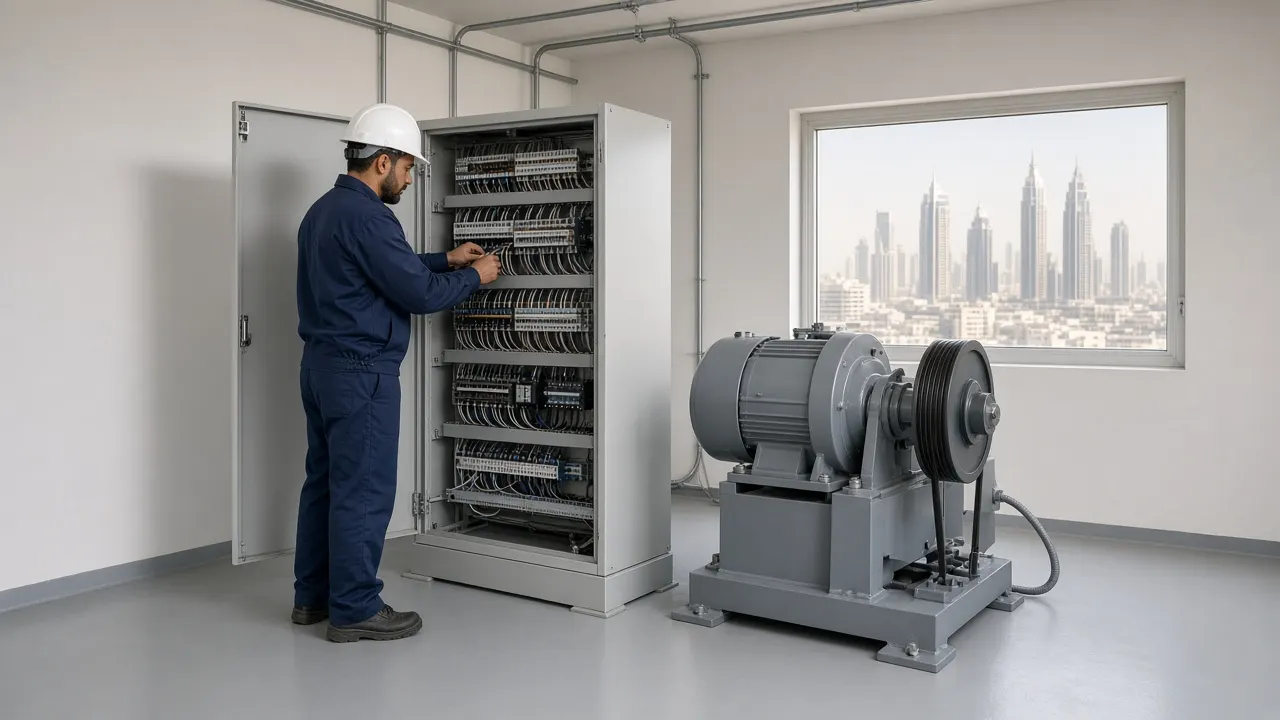
Quick answer: Elevator modernization in Dubai means replacing the parts of an existing lift that have become unreliable, unsupported or unsafe (usually the controller, drive, door operator and push-button fixtures, sometimes the machine) while keeping sound parts such as the guide rails and shaft. Consider it when breakdowns repeat, spare parts become hard to source, the car stops out of level or inspection reports keep listing the same defects. Scope, programme and price should only be set after a site survey, with new components specified to the standard your lift was built to, typically EN 81-20 and EN 81-50, and EN 81-80 used to assess the safety of the existing installation.
Most lifts in Dubai do not fail suddenly. They decline. Doors bounce back for no reason, the car stops a few millimetres proud of the floor, a board has to come from abroad, and the call log gets longer each summer. At some point the question shifts from "how do we fix this?" to "how much longer should we keep fixing this?" That is when elevator modernization in Dubai becomes a planning decision rather than a repair.
This guide covers the signs worth acting on, the scope options from a controller change to a full replacement, planning and downtime in an occupied building, where the EN 81 standards fit, what drives cost, and how maintenance should change afterwards. Elevaya Lifts has worked in the UAE since 2019 on more than 200 projects across lift design, supply, installation and AMC, and as a multi-brand service provider we look after lifts from all major manufacturers, including ones we did not install.
When should you modernize an elevator rather than keep repairing it?
Modernize when keeping the lift running costs more in repairs, downtime and risk than renewing its key systems, or when it can no longer be kept safe and reliable with the parts available. Age alone is a poor trigger: a well-maintained older lift can run reliably for years, while a younger one with an unsupported controller can become a problem early. What matters is condition, parts support and risk together.
One sign below may only need a repair. Three or four together usually justify a modernization survey.
- Repeat breakdowns of the same kind. If a fault returns after every fix, the cause is often an ageing system rather than one worn part.
- Spare parts that are slow, expensive or no longer made. Obsolete controller boards, drives and door operators are the most common reason a lift sits idle.
- Poor levelling. A car that stops above or below the landing is a trip hazard and often points to an old drive or worn brake.
- Rough ride quality. Jerky starts, hard stops and vibration usually trace back to the drive, machine or guide shoes.
- Door trouble. Doors that slam, reopen repeatedly or struggle with dust usually mean a tired operator or outdated door protection.
- The same items on every inspection report. Recurring defects call for a look at the system, not the symptom.
- Outdated fixtures. Worn buttons, unclear indicators or no audible floor announcement make the lift harder to use, especially for older residents and visitors with impaired vision.
- A wider building upgrade. A lobby refurbishment or change of use is often the least disruptive moment to modernize the lifts too.
What does elevator modernization actually involve?
Modernization is not one product. It is a list of components to be replaced, upgraded or retained, agreed in writing after a survey. It helps to think component by component:
| Component | Typical reasons to replace it | What a modern replacement usually brings |
|---|---|---|
| Controller | Relay logic or early microprocessor boards, obsolete parts, intermittent faults | Microprocessor control, clearer fault diagnostics, better dispatching for lift groups |
| Drive | Rough starts and stops, poor levelling, older two-speed or motor-generator systems | Variable voltage variable frequency (VVVF) control for smoother, more accurate stops |
| Door operator and protection | Slamming or reopening doors, frequent door faults, mechanical safety edges | Smoother door motion and full-height light curtain protection |
| Car and landing fixtures (COP/LOP) | Worn or unclear buttons, missing indicators, damaged call panels | New car operating panels, landing call stations, indicators and voice announcement |
| Machine and brake | Wear, noise, oil leaks on geared machines, brake concerns | A new geared or gearless machine and brake matched to the lift's duty |
| Safety components | Ageing governor, safety gear or buffers, protections missing in a risk assessment | Components selected and tested to the current standard |
| Cabin interior | Worn finishes, poor lighting, dated design | New panels, ceiling, lighting and flooring within the lift's weight and fire limits |
A new button panel and a new controller are often confused: the first changes what passengers see, the second changes how the lift thinks. Our elevator control panels guide explains the difference.
Partial modernization vs full modernization vs replacement
Partial modernization replaces one or two systems, most often the controller and drive, or the door equipment, where the rest of the lift is sound. It is the usual choice when one system is clearly the root of the trouble.
Full modernization replaces the controller, drive, door equipment, fixtures and usually the machine, keeping the rails, shaft and often the car frame and counterweight if they survey well. The result behaves much like a new lift without rebuilding the shaft.
Replacement removes the old lift and installs a new one, sometimes in the same shaft. It makes sense when the structure, rails or car frame are unsuitable, or the building needs a different capacity or speed. So old lift replacement vs modernization is not a matter of taste: it depends on what the survey finds.
Which safety standards apply when a lift is modernized in Dubai?
The Dubai Building Code requires vertical transportation to be designed, installed, tested, commissioned and maintained to one suite of standards, either ASME A17 or BS EN 81, and the suites must not be used interchangeably on a project. That rule sits in Part D of the Dubai Building Code 2021, which also lists the EN 81 parts it references. Three matter most for modernization:
- EN 81-20: safety rules for the construction and installation of passenger and goods passenger lifts. It is the benchmark for new lifts and for new components added to an existing one.
- EN 81-50: design rules, calculations, examinations and tests of lift components such as safety gear, buffers, door locks and overspeed governors.
- EN 81-80: rules for improving the safety of existing passenger and goods passenger lifts. It gives a structured way to assess an older lift against known hazards, such as inaccurate stopping and levelling, weak door protection or no protection against unintended car movement, and to prioritise improvements.
The Code's list also includes EN 81-70 and EN 81-82 on accessibility, relevant when fixtures and indicators are replaced.
In practice, an EN 81-20 lift upgrade does not mean rebuilding every part of an old lift to the newest rules. It means specifying replaced components to the current edition, reviewing the interfaces between new and retained parts, and using the time the lift is opened up to close hazards the assessment identifies. If your lift was built to an ASME code, the modernization should stay within that suite.
Testing continues after the work. Dubai Municipality's technical guideline for the examination and certification of lifts and other lifting equipment (DM-HSD-GU48, version 5) requires lifts in workplaces such as hotels to be tested and certified by an EIAC-accredited third party every 12 months, with the certificate issued only after repairs are done and kept on site. Build that inspection into the programme; our elevator inspection and testing guide explains the process.
What to expect in planning and downtime
The lift is out of service while its main systems are changed, so agree the programme and temporary arrangements before work starts. Duration depends on scope, number of lifts, access, the condition of retained parts and equipment lead times, so treat any timeline as an output of the survey, not a figure to accept over the phone.
A typical sequence:
- Survey and condition report: brand, controller, drive, machine, doors, fixtures, rails, car frame, shaft, pit and machine room, with photos, service history and inspection reports.
- Retained-and-replaced schedule: what stays, what changes and how the interfaces are handled.
- Standards and approvals: the standard suite, the hazards to be addressed and any authority or community approvals the scope needs.
- Equipment ordering: most of the waiting happens here, not on site, so ask for lead times in writing.
- Site works: removal, installation, wiring and adjustment. In buildings with several lifts, cars are normally done one at a time so the others keep running.
- Testing and commissioning: functional and safety tests and ride adjustment, then third-party inspection where it applies.
- Handover: certificates, updated drawings, wiring diagrams, manuals and any access codes or diagnostic tools needed for future maintenance.
In a villa with one home lift, plan for the family to manage without it during site works. In a tower, agree resident notices, lobby protection, working hours, service-lift bookings and the order in which cars come out. If escalators are due for the same treatment, see our escalator modernization page.
Lift modernization cost factors in the UAE
We do not publish modernization prices, because two lifts that look identical from the lobby can need very different work. These factors move the number most:
- Scope: the retained-and-replaced schedule is the biggest driver.
- Lift type and size: traction, machine-room-less or hydraulic, load, speed, stops and doors.
- Number of lifts: groups share design and testing effort, but each car needs its own equipment.
- Condition of retained parts: rails, car frame, ropes and landing doors that survey poorly add scope.
- Safety gaps: hazards that must be closed while the lift is opened up.
- Fixtures and finishes: standard panels versus bespoke fixtures and a full cabin refurbishment.
- Access and working conditions: machine room access, lifting equipment, working hours, protection of premium finishes.
- Approvals and inspection: drawings, submissions and third-party testing.
- Brand and parts route: some equipment can only be supported through specific channels.
Compare quotes against the same schedule. A lower price that quietly keeps the old door operator or machine is not the same job.
Multi-brand lifts and modernization
Many Dubai buildings mix manufacturers, or have a lift its original installer no longer supports. Modernization is a chance to fix that. Before choosing a controller, ask whether diagnostic tools, software access and documentation will be handed over, whether any qualified company can maintain it, and which wear parts are held locally.
Elevaya services all lift brands, including lifts we did not install, so we can survey mixed equipment and keep the modernized lifts under one maintenance contract. Our multi-brand lift maintenance guide explains how.
AMC after modernization
Modernization resets the lift's condition, but not its need for maintenance. New controllers, drives and door operators still need regular checks, adjustment and cleaning in UAE dust and heat. Before handover, confirm how the equipment warranty and the AMC fit together so there is no gap in responsibility, rewrite the visit checklist for the new equipment, and keep visit and callout records from the first month.
For reference, Elevaya's non-comprehensive AMC for a G+1 villa lift in Dubai starts from AED 2,500 a year, with 12 visits (one each month), labour to fix issues found on those visits and free 24-hour emergency callouts; parts are charged only when they need changing. Larger buildings and escalators are quoted after a survey. See our elevator AMC cost guide, the lift maintenance and AMC page, and, if you are still choosing a contractor, our buyer's checklist for lift companies in Dubai.
How Elevaya approaches lift modernization in Dubai
Every lift modernization we propose starts with a technical site survey and a written condition report. We then agree what needs to change and why, build a retained-and-replaced schedule, confirm the standard suite and inspection route, and give you an itemised quotation and programme. We will also tell you when a targeted repair is enough and modernization can wait.
Related Elevaya guides
Continue planning with these related Elevaya guides:
- How to choose the best lift company in Dubai: buyer's checklist: licences, AMC terms, written response times, parts, references and red flags.
- Elevator AMC cost in Dubai: villa owners' guide: non-comprehensive from AED 2,500 for G+1, visits, callouts and parts rules.
- Elevator and escalator speeds in UAE buildings: rated lift speed by travel height and 0.5 vs 0.65 m/s escalators.
- Escalator design and maintenance for UAE malls: layout, balustrades, dust and heat, AMC and modernization.
- Luxury elevator interiors in the UAE: marble, bronze and wood: weight, fire performance and cleaning of premium cabin finishes.
- Elevator cabin design trends in the UAE for 2026: finishes, COP/LOP panels, LED lighting and glass cabins.
- Glass and panoramic villa lifts in Dubai: 2026 planning guide: placement, glazing, heat control, approvals and AMC care.
- Glass villa lift in Dubai: footprint, heat and cost factors: shaft vs shaftless, laminated glass, cabin cooling, hydraulic vs MRL vs platform.
- Lift speed by building height in Dubai towers: DBC travel-time formula, worked m/s examples, waiting times, DHA hospital and Trakhees rules.
- Escalator faults and repairs in Dubai: why escalators stop, safety-device trips, handrail and step chain wear, sand and heat, repair vs modernization.
- Lift installation in Dubai: step-by-step process: survey, shaft, pit and headroom prep, supply and delivery, installation sequence, testing, EIAC certification and handover.
- Lift and elevator supply in the UAE: buyer's guide: supply-only vs supply and installation, what to specify, what a supply quote must include, BS EN 81 / ASME A17, EIAC certification, escalator supply and red flags.
- Lift maintenance checklist for Dubai: monthly service visit: what each monthly visit should check on doors, ride, machine and brake, alarm, car top and pit, the log book, maintenance vs inspection, villa lifts and an escalator checklist.
- Lift COP and LOP panels in Dubai: what is on each panel, DBC button heights, Braille and intercom rules, common faults, repair vs replacement.
- Lift upgrades in Dubai: what to upgrade first: rescue devices for power cuts, door light curtains, VVVF and energy saving, cabin refresh, alarms, EN 81-80, upgrade vs modernization.
- Common lift problems in Dubai: causes and fixes: stuck lifts, doors not closing, jerky rides, noise and summer heat trips, safe owner checks, trapped-passenger steps, repairs and certification.
- Escalator modernization in the UAE: signs, scope and compliance: when to modernize, modernize vs replace, controller and drive, steps, chain and handrail, energy features, phased mall works and the EIAC major inspection.
- Escalator installation in the UAE: step-by-step process: survey and selection, pit and truss supports, rigging, alignment, controller, safety devices, testing, EIAC inspection and handover.
FAQ
What is elevator modernization?
The planned replacement of an existing lift's key systems, typically the controller, drive, door equipment and fixtures, sometimes the machine, while keeping sound parts such as the guide rails and shaft. It improves reliability, safety and ride quality without the full scope of a new installation.
How do I know when to modernize an elevator?
Consider it when the same faults keep returning, spare parts become hard to source, the car stops out of level, doors misbehave or inspection reports keep listing defects. One sign may only need a repair; several together usually justify a modernization survey.
Is it better to modernize or replace an old lift?
It depends on the survey. If the rails, car frame and shaft are sound, modernization usually renews the lift with less building work. Replacement makes more sense when the structure or car frame is unsuitable or the building needs a different capacity or speed.
Which standards apply to lift modernization in Dubai?
The Dubai Building Code requires one suite of standards per project, either ASME A17 or BS EN 81. Under EN 81, new components are normally specified to EN 81-20 and EN 81-50, while EN 81-80 is used to assess and improve the safety of the existing lift.
What affects the cost of lift modernization in the UAE?
Scope of work, lift type, load, speed and stops, number of lifts, condition of retained parts, safety gaps found in the assessment, fixtures and finishes, site access, approvals and inspection, and the parts route for the brand. A reliable price follows a site survey.
Do I still need an AMC after modernization?
Yes. New equipment still needs regular checks, adjustment and cleaning. Agree how the warranty and AMC work together, update the maintenance checklist for the new equipment and keep visit and callout records from the first month.
Plan your lift modernization with Elevaya
Thinking about modernizing a villa lift, a tower lift group or a commercial building's lifts? Elevaya can survey the equipment, explain what is worth keeping and give you a written, itemised modernization proposal. Call or WhatsApp +971 58 584 4685 or request a site survey.
Modernize or replace an old elevator: a decision worksheet
Start with the fault history and condition report. Age alone does not establish that a lift needs complete replacement, and a fresh cabin finish does not solve a failing door operator or obsolete controller. Identify what remains serviceable, what needs replacement and whether the proposed components can work together.
| Option | A reason to assess it | Questions before committing |
|---|---|---|
| Targeted repair | A diagnosed defect in supportable equipment | What caused it, which interfaces are affected, and how will the repair be tested? |
| Partial modernization | Repeated failures, obsolete controls or a defined usability need | Which machine, doors, wiring and safety components remain, and what compatibility checks are required? |
| Full replacement | The equipment condition, layout or support requirements justify a new system | What changes to the shaft, structure, access, power and approvals are included? |
For an occupied tower, define the shutdown sequence, delivery route and communication to residents before agreeing dates. A single-lift building needs a different access plan from a group where other cars can continue serving occupants. Parts procurement, builder’s work, testing and independent inspection belong in the programme; no fixed universal duration describes all these cases.
Review the modernization service scope and cabin refurbishment separately. Tower managers can also use the JLT AMC and handover guide and Business Bay maintenance guide to prepare records before changing equipment or contractors.