Elevaya journal
Escalator Modernization in the UAE: When to Upgrade, What to Replace and How Dubai Compliance Works
Escalator modernization in the UAE: signs it is due, modernize vs replace, drive, step and handrail upgrades, phased mall works and Dubai compliance.
Published · Updated · Elevaya Lifts
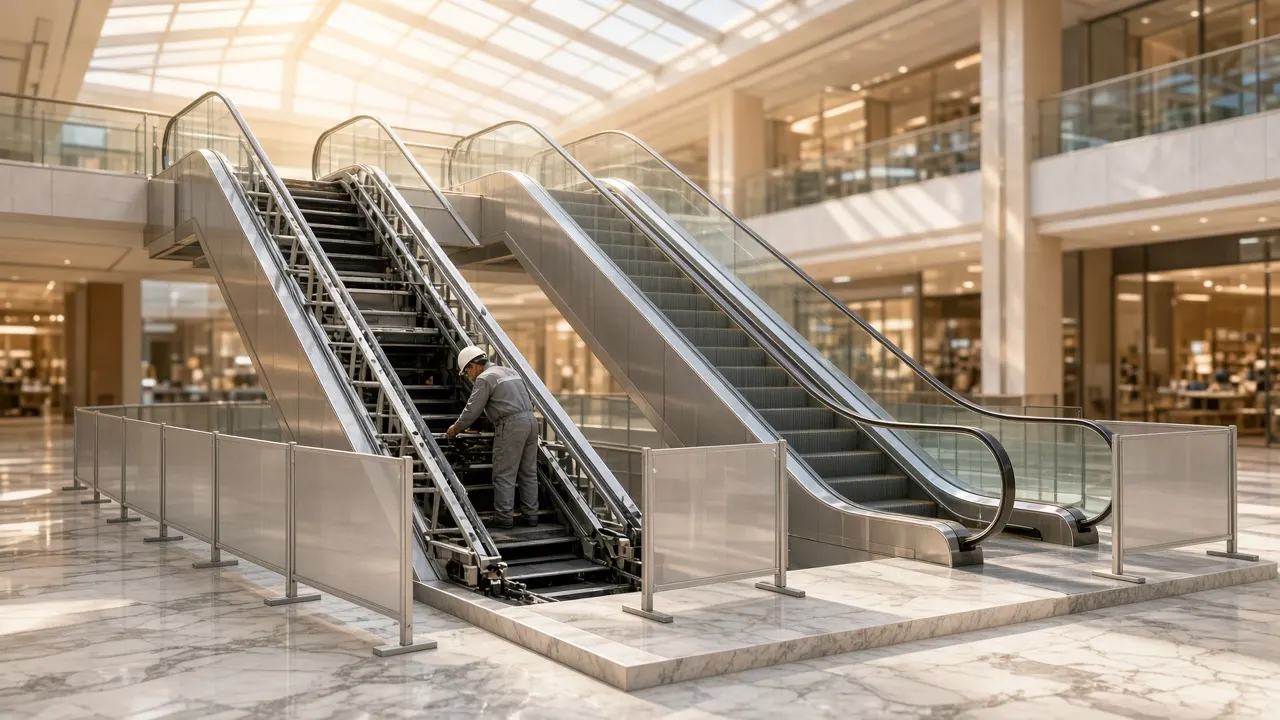
Quick answer: Escalator modernization in the UAE means replacing the worn or outdated parts of an existing escalator, usually the controller and drive, the motor and gearbox, the steps and step chain, the handrail system, the comb plates and the safety devices, while keeping the existing truss in place. It is worth costing when faults keep returning across several systems, spare parts are getting hard to find, the control system has no useful fault records, or the unit is missing the energy and safety features expected today. Full replacement is the better choice when the truss itself is damaged or the layout no longer works for the building. In Dubai, the works should follow the one suite of standards selected for the project under the Dubai Building Code (its reference list includes BS EN 115-1 for escalators and moving walks), and EIAC's requirements for lifting equipment inspection bodies say equipment that has been majorly repaired, upgraded or modified goes through a major inspection, so build that inspection into the programme. Plan the works in phases, with barriers and alternative routes, so a mall, station or tower keeps moving.
An escalator rarely fails all at once. It gets louder, trips more often, waits longer for parts, and gradually becomes the unit your facility team apologises for. At some point the monthly repair bill and the lost footfall stop making sense, and the question becomes whether to keep patching it, modernize it, or take it out.
This guide covers escalator modernization in the UAE from the owner's side: the signs that an escalator is due, when modernizing beats replacing, what can be included in the scope, how malls, metro and transport stations and towers phase the works, and what Dubai's code and inspection rules mean for a modernized unit. It is written for mall operators, facility managers, building owners and consultants who need to make the decision and check the proposal, not do the work.
If your escalator has a specific fault today, start with our guide to escalator faults and repairs in Dubai, which explains safety-device trips, handrail and step chain wear and when a repair is enough. For passenger lifts rather than escalators, read elevator modernization in Dubai. This post stays on escalators and moving walks.
Elevaya Lifts has worked in the UAE since 2019 on more than 200 projects, covering design, supply, installation and annual maintenance contracts (AMC). We are a multi-brand service company: we service all lift and escalator brands, including units we did not install, so we often survey escalators that another company has maintained for years.
What does escalator modernization actually mean?
Escalator modernization is a planned upgrade of an existing escalator's main systems inside its existing truss, so the unit runs more safely, reliably and efficiently without the cost and disruption of removing it. It sits between two other options:
- Repair fixes a defined fault, such as a worn handrail, a broken step or a tripped switch, and returns the escalator to its previous condition.
- Modernization replaces or upgrades selected systems, for example the controller and drive, or the whole step band, because the old ones are worn out, outdated or no longer supported.
- Replacement removes the escalator, including the truss, and installs a new unit in the same opening or a modified one.
Many owners also talk about refurbishment, which usually means renewing finishes such as cladding, skirt panels or balustrade glass. Refurbishment can be part of a modernization, but new cladding on its own does not modernize anything. Keep cosmetic work and technical work separate in the proposal, so you can see what you are paying for.
Our escalator modernization service page explains how Elevaya surveys a unit and separates repair, refurbishment, modernization and replacement in the scope.
Signs an escalator needs modernizing
The clearest sign is a pattern, not a single breakdown: several systems wearing out together, parts getting harder to source, and a control system that cannot tell your technician why the unit stopped. Look for these:
- The same unit keeps tripping for different reasons. Handrail speed faults one month, step sag or roller noise the next, then a controller fault. Each repair works, but the escalator as a whole is ageing.
- Parts lead times are growing. If steps, handrails, boards or drive parts for your model now take a long time to arrive, or need to be adapted from other models, the risk of a long stoppage is rising.
- The controller has no useful fault history. Older relay-based or early electronic controllers often show little more than "stopped". Diagnosis takes longer and repeat faults are hard to trace.
- No energy-saving features. If the escalator runs at full speed all night in an empty mall, it has no reduced-speed or stand-by control. Newer buildings in Dubai must have these (see the energy section below).
- Rough ride, noise and vibration. Worn step chains, rollers, tracks and drive components show up as noise, jerks and steps that no longer line up neatly at the comb.
- Inspection findings repeat. If the third-party inspection body raises the same items on the same unit, the problem is usually bigger than one part.
- The building is being refurbished anyway. A mall or tower refit is a good time to modernize, because barriers, access and shutdowns are already being planned.
One sign on its own may only need a repair. Three or four together usually justify a condition survey and a modernization option in writing.
Escalator replacement vs modernization: which is right?
Modernize when the truss and the escalator layout are sound and the problems are in the moving parts and controls; replace when the truss is damaged, the opening or layout has to change, or the cost of upgrading most systems approaches a new unit. This table helps frame the decision before the survey.
| Question | Points to modernization | Points to full replacement |
|---|---|---|
| Truss condition | Structurally sound, no serious corrosion or damage | Damaged, corroded or modified in ways that cannot be verified |
| Layout and opening | Same rise, angle and position still suit the building | Rise, width, angle or position must change |
| Scope of worn parts | Concentrated in drive, controls, step band or handrail | Almost every system is worn or obsolete |
| Parts support | Modern replacement parts fit the existing truss | Key parts no longer fit or are unavailable |
| Downtime tolerance | Unit can be closed in phases while others carry traffic | A longer closure is acceptable or unavoidable |
| Building works | Opening stays as it is, finishes renewed around it | Floor slab, ceiling or balustrade layout is being rebuilt |
| Future use | Same traffic pattern and duty expected | Much heavier duty, outdoor exposure or new use |
The survey is what turns this table into an answer. A good surveyor records the manufacturer, model, asset number, service history and observed issues, checks the truss and the main components, and then sets out which parts are retained and which are replaced.
What can an escalator modernization include?
A modernization scope is built from modules, so you can upgrade only what the survey shows is needed, or combine several modules into one closure. The common options are:
| Module | What it usually covers | Why owners choose it |
|---|---|---|
| Controller and drive | New control system, variable-frequency drive (VFD), fault logging and safety circuit interface | Better diagnostics, soft starts, energy-saving modes |
| Motor and gearbox | New drive motor, gearbox or complete drive unit, main drive chain and brake | Worn or noisy drive, parts no longer supported |
| Step band | New steps, step chain, step rollers and, where needed, tracks and sprockets | Rough ride, step sag, chain stretch, damaged steps |
| Handrail system | New handrails, handrail drive, newels and guides | Handrail speed faults, cracks, heat damage |
| Comb plates and landing plates | New comb segments, comb plates and floor plates | Broken teeth, poor step-to-comb fit, trip risk |
| Safety devices | Comb, step, handrail entry, skirt, missing-step and other safety switches, plus emergency stops | Old devices worn or not matched to the new controller |
| Energy features | Reduced-speed and stand-by control with photocell detectors | Lower energy use and wear in quiet hours |
| Lighting | LED comb, skirt and step-gap lighting | Visibility at the landings |
| Balustrade and cladding | New glass or panels, skirt panels and deck boards | Damaged finishes, part of a wider refit |
Escalator drive and controller upgrade
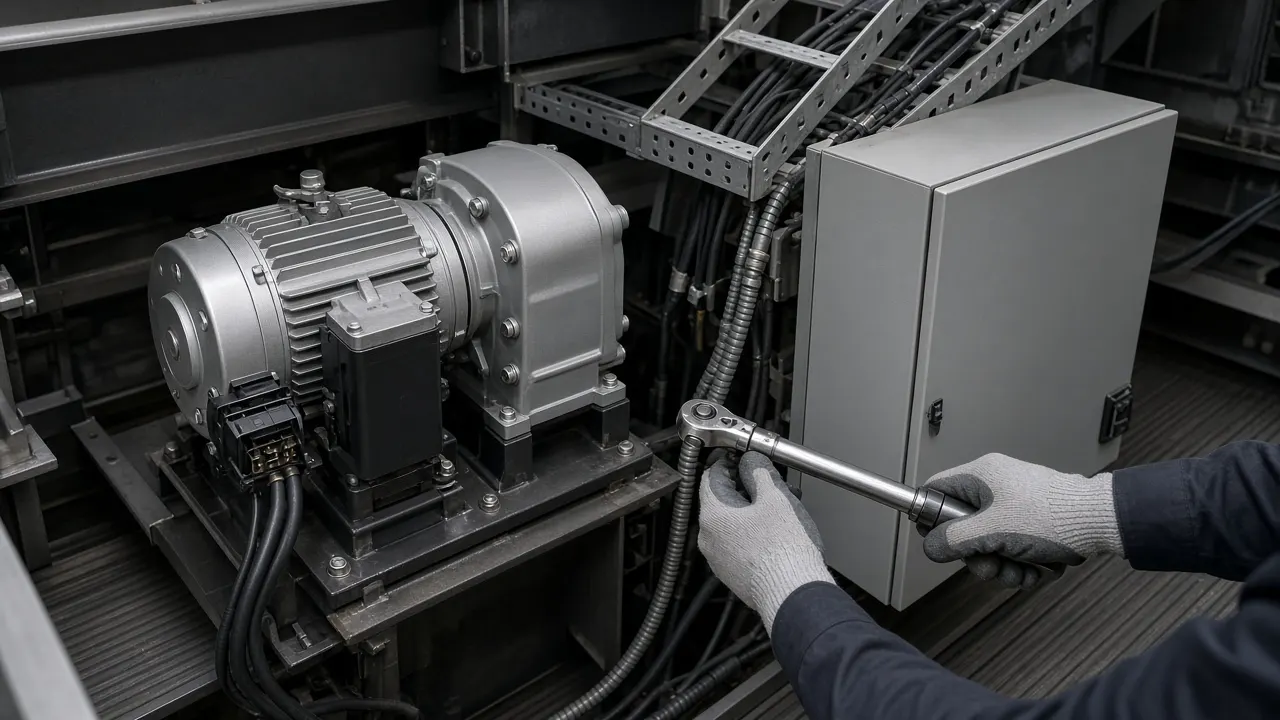
For many units, a new controller with a variable-frequency drive is the first and most valuable upgrade, because it improves diagnosis, ride quality and energy use in one step. A modern controller records what tripped, when and how often, which turns "the escalator stopped again" into a fault your technician can act on. A VFD gives a soft start and lets the escalator run at a slower speed when nobody is using it.
If the motor or gearbox is also worn, it often makes sense to replace the drive unit in the same closure, together with the main drive chain and the brake, so the new controller is not driving tired mechanical parts. Ask the proposal to say clearly whether the existing motor, gearbox and brake are retained, tested or replaced.
Escalator handrail and step replacement
Replacing the step band and the handrail system is the biggest change passengers notice, and it is where much of the wear on a busy UAE escalator ends up. Sand, dust and heavy daily traffic wear step rollers, chains and comb plates, while heat and sunlight age handrails, especially near glass facades and building entrances.
When steps are replaced, the step chain and rollers are usually checked or replaced too, because new steps on a stretched chain will not run well for long. The same goes for handrails: a new handrail on a worn handrail drive can still slip and trip the speed monitor.
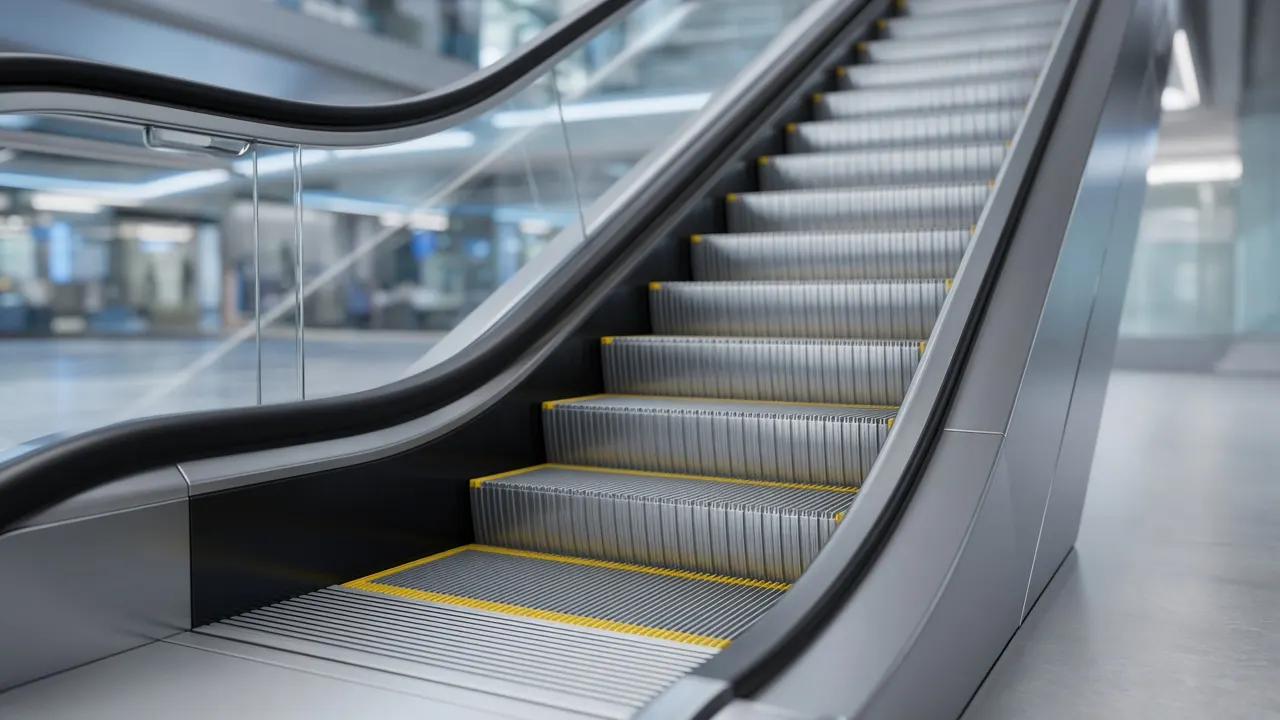
New steps are also a chance to bring the passenger details up to date. Section C.5.9.5.2 of the Dubai Building Code 2021 says escalators shall include horizontal and vertical edges to the tread nosing of all steps finished in yellow, handrails that include colour contrast dots or similar, clear information on the direction of travel, and approach and exit flooring that visually contrasts with the surrounding floor. It also says the escalator shall move horizontally for at least four treads at both ends before changing direction. The responsible design team should confirm which of these apply to your project; on an older unit, a modernization is the natural moment to check them.
Energy features and lighting
The Dubai Building Code requires escalators and moving walks in new buildings to slow down and stop when nobody is using them, and a modernization is the usual way to add the same features to an older unit. Section D.6.2 of the code sets out two features:
- Reduced speed control: when no activity has been detected for a maximum of 3 minutes, the escalator or moving walk shall reduce to a slower speed.
- Use on demand: when no activity has been detected for a maximum of 15 minutes, the escalator or moving walk shall shut down, and on-demand units shall have energy-efficient soft-start technology.
For both features, photocell activation detectors are placed at the top and bottom landing areas. D.6.2 is written for new buildings, so it is not automatically a retrofit requirement for every existing escalator, but it is a sensible target for a new controller and drive. Our guide to elevator and escalator speeds in UAE buildings explains the normal running speeds.
New LED comb lighting and step-gap lighting are small items that make the landings easier to read, especially in dim atriums and station concourses.
Phased modernization in malls, metro stations and towers
Escalator modernization in a busy building is mostly a planning job: the technical work happens behind barriers, while the rest of the building keeps moving. In practice that means:
- One unit at a time. Where escalators run in pairs or groups, modernize one while the others carry traffic, and agree in advance which direction stays open.
- Barriers and screening. Full-height or solid barriers around the work area, with dust control, so shoppers and passengers cannot reach the open truss or machine spaces.
- Alternative routes and signage. Clear directions to the nearest lift, stairs or other escalator. In its section on malls, the Dubai Building Code says escalators and moving walks shall not replace elevators as the means of circulation for people of determination using wheelchairs, so lifts must stay available.
- Deliveries and removal. Steps, handrails and drive units are bulky. Plan delivery routes, storage and removal of old parts outside peak hours.
- Working hours. Noisy and dusty work, such as removing steps or cutting, is often scheduled at night or before opening.
- Communication. Tell tenants, staff and visitors what is closed, for how long and why.
- Handback. Agree who tests the escalator, who arranges the third-party inspection, and when the barriers come down.
Malls in Dubai lean heavily on escalators. The same section of the Dubai Building Code (D.8.15.1) says escalators are used by approximately 80% of people in retail buildings, so losing one unit at the wrong time is noticed. Phasing is what keeps a modernization from becoming a footfall problem.
Dubai compliance: standards, certification and the major inspection
A modernized escalator in Dubai should be designed, installed, tested and maintained to the suite of standards chosen for the project, and then inspected and certified by an EIAC-accredited inspection body before it returns to normal use. The key documents are:
Dubai Building Code 2021, Part D. Section D.5 says vertical transportation, which includes escalators and moving walks, "shall be designed, installed, tested, commissioned and maintained" to one suite of standards, either ASME A17 or BS EN 81, and that one suite is selected for a project and not used interchangeably. The references in D.3 include BS EN 115-1, Safety of escalators and moving walks, Part 1: Construction and installation, alongside the ASME A17 documents. D.5 also requires enhanced handrail protection at the entry to escalators and moving walks. In Table A.1, the code treats a change to a service system or building element in an existing building as a "modification", and says the DBC and the UAE Fire and Life Safety Code apply to that change. Ask your consultant to confirm how this applies to your building.
EIAC-RQ-IB-002 (lifting equipment inspection bodies). The Emirates International Accreditation Centre's requirements for lifting equipment inspection bodies list escalators as lifting equipment (clause 2.2). Clause 2.6 counts alterations to safety devices and to driving mechanisms and controls as repair or alteration, and clause 2.5 defines a major repair or alteration as one that changes the equipment's capacity, function or the way it is controlled, including an increase in rated speed or work affecting load-carrying parts, strength or stability. Clause 2.22 lists when a major inspection applies, including after a major repair or alteration and for equipment that was upgraded or modified, and clause 5.5.1 says inspection bodies shall ensure equipment that was majorly repaired is subjected to a major inspection. Clause 5.5.2 says it covers a design review to the extent of the repair and its effect on the whole system, a repair inspection, a visual inspection and a functional test, plus a proof load test where it applies (Annex B places escalators and passenger conveyors among equipment that cannot be proof load tested). Annex B also lists escalators for periodic inspection every six months in the Emirate of Dubai.
Dubai Municipality DM-HSD-GU48-ECLA2. Dubai Municipality's technical guideline for examination and certification of lifting equipment (version 5, 2025) requires lifting equipment used in factories, construction sites, hotels and other workplaces to be tested and certified by a third party accredited by EIAC once every 12 months. The accredited third party issues a certificate of safety only after due examination and test and after any repairs have been carried out (requirement 4), repairs it identifies must be carried out immediately (requirement 5), and if it considers equipment unsafe the owner must be advised to stop using it (requirement 6). The compliance certificate must be kept at the site (requirement 9).
In plain terms: build the inspection into the modernization programme from the start. The proposal should say who prepares the documents for the inspection body, who books the inspection, and what happens if the inspector raises findings. Confirm the inspection type and interval that apply to your escalators with your accredited inspection body.
What an escalator modernization proposal should include
A good proposal lets you compare offers line by line and shows exactly what will change, what stays and who is responsible for each step. Ask for:
- the survey findings for each unit, with asset details and photos;
- a list of retained and replaced components (truss, drive, controller, steps, chain, handrails, combs, safety devices, finishes);
- the standards the work will follow and how the safety devices will be tested;
- the phasing plan: which units close, in what order, and what stays open;
- barriers, dust control, working hours and delivery arrangements;
- responsibilities for testing, the third-party inspection and handover documents;
- warranty terms and exclusions for the new parts;
- parts support for the new equipment and the maintenance plan after handover;
- clear exclusions, such as civil works, finishes around the opening or fire alarm interfaces.
If two quotes differ a lot, the difference is usually hidden in the retained-parts list. Our buyer's checklist for choosing a lift company in Dubai explains what to ask for in writing.
Maintenance after an escalator is modernized
A modernized escalator still needs planned maintenance from day one, and the new controller makes that maintenance easier to check. Fault records from the new control system show which safety devices trip and how often, so repeat problems are found early. Keep cleaning comb plates, steps and pits of sand and debris, check the energy features and photocells are working rather than bypassed, and keep the inspection certificate on site.
Our lift maintenance checklist for Dubai includes a short escalator checklist, and our escalator maintenance and repair service covers malls, towers and public buildings.
How Elevaya approaches escalator modernization
Elevaya Lifts surveys escalators and moving walks across the UAE, for all brands, including units we did not install. We record the asset details and condition, separate repair, refurbishment, modernization and replacement options, and set out the retained and replaced parts in writing so the owner can make an informed decision. Where a modernization goes ahead, we plan the phasing around the building, coordinate the testing and third-party inspection steps included in the project, and can then maintain the escalator under an AMC.
You can see the range of equipment we work on in our escalators section and our completed projects.
Related Elevaya guides
Continue planning with these related Elevaya guides:
- Escalator faults and repairs in Dubai: why escalators stop, safety-device trips, handrail and step chain wear, sand and heat, repair vs modernization.
- Escalator design and maintenance for UAE malls: layout, balustrades, dust and heat, AMC and modernization.
- Elevator modernization in Dubai: signs, scope and standards: when to modernize, controller and door upgrades, EN 81-20/80, downtime and cost factors.
- Lift upgrades in Dubai: what to upgrade first: rescue devices for power cuts, door light curtains, VVVF and energy saving, cabin refresh, alarms, EN 81-80, upgrade vs modernization.
- Lift maintenance checklist for Dubai: monthly service visit: what each monthly visit should check on doors, ride, machine and brake, alarm, car top and pit, the log book, maintenance vs inspection, villa lifts and an escalator checklist.
- Elevator and escalator speeds in UAE buildings: rated lift speed by travel height and 0.5 vs 0.65 m/s escalators.
- Lift and elevator supply in the UAE: buyer's guide: supply-only vs supply and installation, what to specify, what a supply quote must include, BS EN 81 / ASME A17, EIAC certification, escalator supply and red flags.
- Lift installation in Dubai: step-by-step process: survey, shaft, pit and headroom prep, supply and delivery, installation sequence, testing, EIAC certification and handover.
- How to choose the best lift company in Dubai: buyer's checklist: licences, AMC terms, written response times, parts, references and red flags.
- Elevator AMC cost in Dubai: villa owners' guide: non-comprehensive from AED 2,500 for G+1, visits, callouts and parts rules.
- Common lift problems in Dubai: causes and fixes: stuck lifts, doors not closing, jerky rides, noise and summer heat trips, safe owner checks, trapped-passenger steps, repairs and certification.
- Lift out of service in a UAE building: who to report it to: who is responsible, the 14-day RERA route in Dubai, municipality contacts by emirate, and what owners and tenants can ask for.
- Export lifts and elevator spare parts from the UAE: export documents, HS codes 8428 and 8431.31, Dubai Chambers certificate of origin fees and the steps from enquiry to shipment.
- Lift COP and LOP panels in Dubai: what is on each panel, DBC button heights, Braille and intercom rules, common faults, repair vs replacement.
- Lift speed by building height in Dubai towers: DBC travel-time formula, worked m/s examples, waiting times, DHA hospital and Trakhees rules.
- Glass villa lift in Dubai: footprint, heat and cost factors: shaft vs shaftless, laminated glass, cabin cooling, hydraulic vs MRL vs platform.
- Glass and panoramic villa lifts in Dubai: 2026 planning guide: placement, glazing, heat control, approvals and AMC care.
- Elevator cabin design trends in the UAE for 2026: finishes, COP/LOP panels, LED lighting and glass cabins.
- Luxury elevator interiors in the UAE: marble, bronze and wood: weight, fire performance and cleaning of premium cabin finishes.
- Escalator installation in the UAE: step-by-step process: survey and selection, pit and truss supports, rigging, alignment, controller, safety devices, testing, EIAC inspection and handover.
Related Elevaya services and guides: Escalator modernization, Escalators, Moving walkways, Escalator maintenance and repair, Escalator parts and safety components, Commercial lift and escalator maintenance, Elevator spare parts, Inspection preparation.
FAQ
What is escalator modernization?
Escalator modernization is the planned replacement or upgrade of an existing escalator's main systems, such as the controller and drive, motor and gearbox, steps and step chain, handrails, comb plates and safety devices, while the existing truss stays in place. It improves safety, reliability and energy use without removing the whole unit.
When should an escalator be modernized instead of repaired?
Consider modernization when several systems are wearing out together, the same unit keeps tripping for different reasons, spare parts are getting hard to source, the controller gives little or no fault information, or inspection findings keep repeating. A single worn part on a sound escalator is usually a repair.
Is it better to replace or modernize an escalator?
Modernize when the truss is sound and the layout still suits the building, because most of the wear is in the moving parts and controls. Replace when the truss is damaged, the rise, width or position has to change, or almost every system is obsolete. A condition survey should set out both options in writing.
What does an escalator drive and controller upgrade include?
Usually a new control system with a variable-frequency drive, fault logging and a matched safety circuit, and often a new motor, gearbox or complete drive unit with the main drive chain and brake. It gives soft starts, clearer diagnosis and the reduced-speed and stand-by features the Dubai Building Code requires on escalators in new buildings.
Does a modernized escalator need a new inspection in Dubai?
Yes, plan for one. EIAC's requirements for lifting equipment inspection bodies (EIAC-RQ-IB-002) say equipment that has been majorly repaired, upgraded or modified goes through a major inspection, and Dubai Municipality requires lifting equipment in workplaces to be tested and certified by an EIAC-accredited third party, with the certificate kept on site. Confirm the inspection type with your inspection body.
Can a mall escalator be modernized while the mall stays open?
Often, yes, if the escalators are modernized one at a time behind solid barriers, with alternative routes, clear signage, lifts kept available and noisy work scheduled outside peak hours. The phasing depends on the number of units, the building layout and the surveyed scope.
Plan your escalator modernization with Elevaya
Thinking about modernizing an escalator in a mall, tower, hotel or station in the UAE, or want a second opinion on a modernization quote? Elevaya surveys and services all escalator and lift brands. Call or WhatsApp +971 58 584 4685 or contact Elevaya to arrange a site survey.