Describe the complete route.
Identify the starting and destination levels, internal or external location, approach space, doors, landings and alternative routes. Explain whether a wheelchair, attendant or other mobility aid is involved. Do not share private medical details that are not needed for the building brief.
Platform, stair and passenger lifts are different categories.
A vertical platform lift, inclined stairlift and passenger lift can solve different movement needs and follow different equipment and building requirements. Elevaya does not claim every category is suitable or immediately available. The assessment confirms the appropriate route and whether a specialist product or partner is required.
Coordinate with the responsible accessibility design.
Applicable accessibility, fire, egress, authority and consultant criteria must be addressed by the responsible project team. The lift cannot be treated as a substitute for a complete accessibility strategy. Elevaya can coordinate relevant approval steps included in its scope, but does not issue authority certification through the website.
Existing homes need careful retrofit planning.
Record occupancy, structural constraints, weather exposure, gates or doors, electrical provisions and delivery access. Avoid cutting floors or stairs before equipment and structural information are coordinated. The work plan should protect residents and define temporary access, noise, dust and reinstatement responsibilities.
Controls, communication and finishes follow the users.
Discuss control position, operation, access, visual or audible information, communication and the property procedure for a stopped unit. Final features depend on the assessed equipment and requirements. Choose finishes for practical use, cleaning and visibility as well as appearance.
Prepare a technical survey pack.
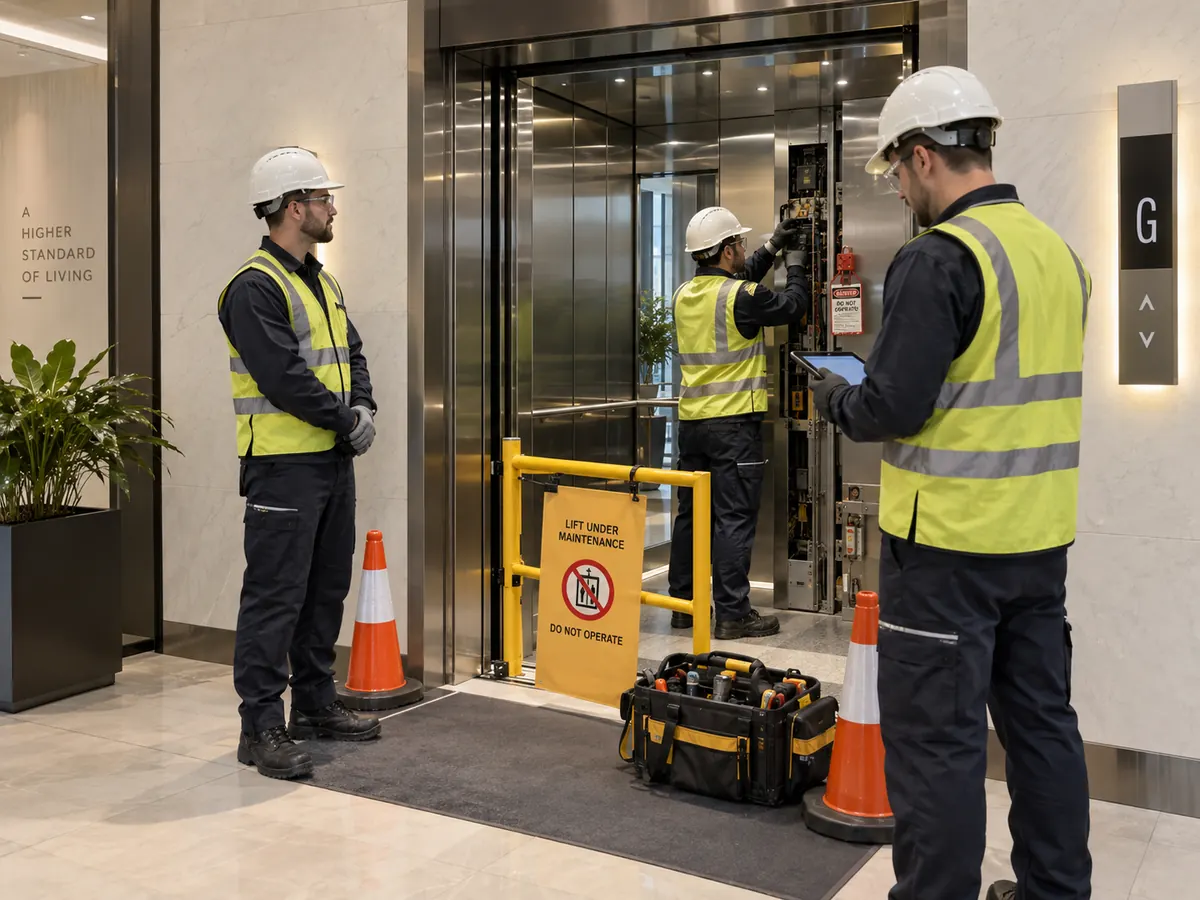
Send the Emirate and exact site, building use, project stage, floors or travel, entrances, intended users or goods and the site contact. For existing equipment, add the manufacturer, model or asset number, current maintenance arrangement, available manuals and service reports, and a factual description of observed issues. Photographs and drawings help the team prepare, but they do not confirm dimensions, condition or suitability. Do not enter shafts, pits, machine areas or restricted equipment to collect information.
- Location, building use and responsible contact
- New project, existing equipment or replacement
- Drawings, asset details and records available
- Access, occupancy and shutdown constraints
- The outcome you need from the survey
Follow the project from decision to handover.
After the survey, the proposal should define accepted equipment, responsibilities, assumptions, exclusions, programme dependencies and the route for changes. Before work begins, confirm access, building interfaces, authority or consultant coordination and who approves additional work. At handover, retain equipment identity, agreed test or inspection records, operating information, warranty terms and maintenance arrangements. Elevaya does not offer an instant online price because these facts materially change the safe and commercial scope.
Service and warranty must continue after handover.
The proposal should define documentation, user handover, maintenance, reporting, parts and warranty. Elevaya offers 24/7 service support, OEM parts where specified and available, and written warranty coverage fixed in the accepted contract. Attendance and response terms remain site- and contract-specific.
Wheelchair lift, platform lift and accessibility lift: define the journey.
These search terms can refer to different equipment and routes. Describe whether the user remains in a wheelchair, the vertical or inclined travel needed, the levels and entrances, indoor or exposed conditions, available space and how the landing connects to the wider accessible route. Avoid selecting a system from the label “handicap elevator” alone. The user brief, building assessment, applicable accessibility requirements and selected equipment determine the appropriate proposal.
Questions, answered.
Do you install wheelchair platform lifts in villas?
Villa requirements can be assessed. The user route, building, space, structure, access and equipment category must be reviewed before a solution is confirmed.
Is a stairlift the same as a platform lift?
No. They are distinct equipment categories. The route and user brief determine which category should be assessed.
Will the lift automatically make my building compliant?
No single product guarantees building compliance. Accessibility, fire, egress and authority requirements must be coordinated for the whole project.
Can you quote from photographs?
Photographs help prepare a discussion but do not confirm dimensions, structure, interfaces or equipment. A technical site survey is required before quotation.
Is a platform lift the same as a passenger elevator?
Not necessarily. Platform lifts and passenger elevators can have different intended uses, arrangements and requirements. Define the user journey and building conditions, then review the suitable equipment and project obligations with qualified parties.
Equipment suitability, service availability and site-specific requirements must be confirmed for each project.