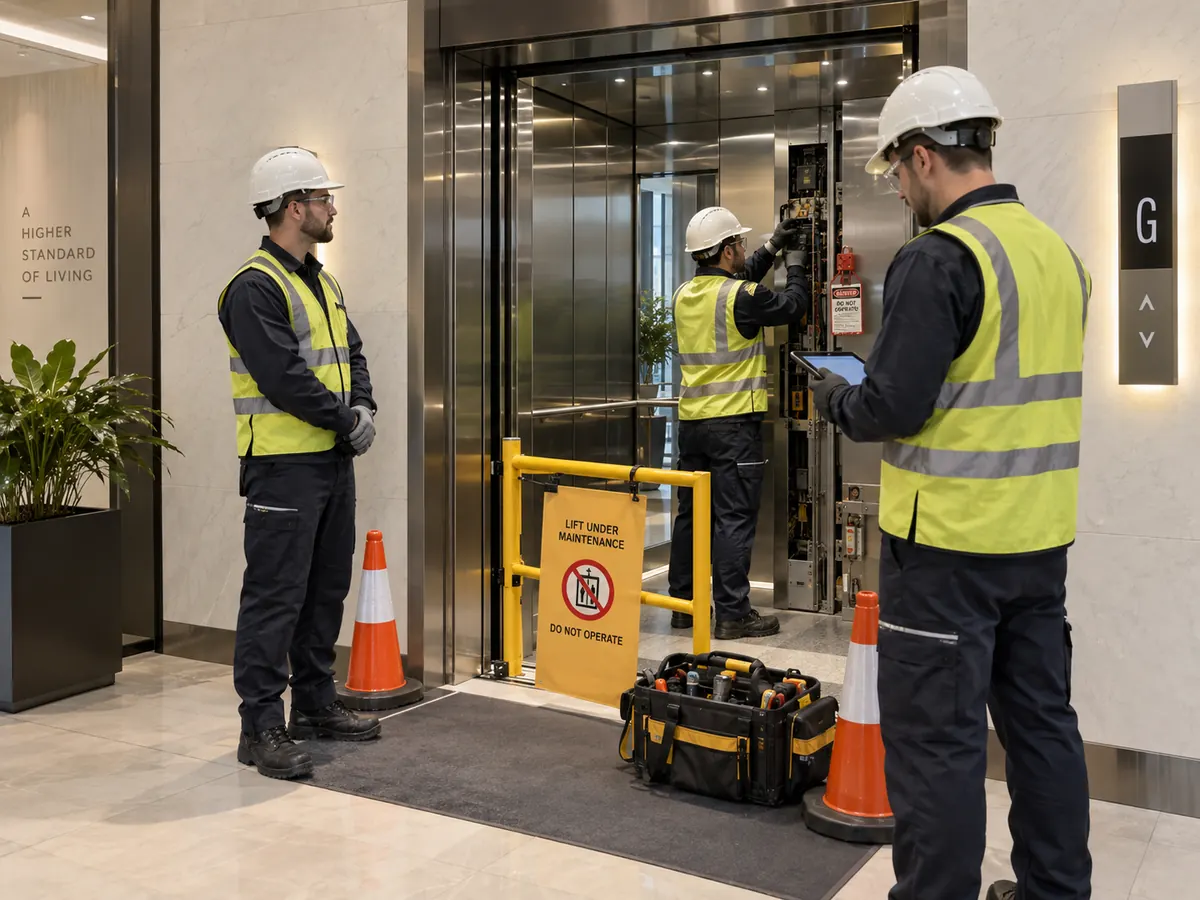
Identify the lift before identifying the part.
Gather the manufacturer, model or controller identity, asset number, building and available records. Photograph only labels and components visible from normal accessible areas; do not open cabinets or enter a shaft, pit or machine space. A supplier description or marketplace photo may omit electrical, mechanical, software or certification differences. The technical assessment must link the proposed component to the actual unit.
A spare part enquiry can represent three different needs.
Some enquiries concern a like-for-like replacement after an assessed fault. Others involve an alternative component that requires interface review, or a wider modernization where the original equipment is no longer supportable. These are different scopes with different responsibilities. The proposal should name the part or assembly, why it is proposed and what related work or checks are included.
Repair replacement
The assessed component is replaced within a defined corrective-work scope, followed by the agreed checks and records.
Modernization change
The proposed component changes an interface or system and must be reviewed with retained equipment, documentation and handover requirements.
Door sensors, operating panels and controllers are not interchangeable.
A door sensor observation does not prove that the sensor alone is defective. Cabin and landing doors include multiple interacting parts, while operating panels and main controls serve different functions. Describe the symptom and location rather than ordering from appearance. Electrical ratings, communication interfaces, mounting, software and required functions may all affect compatibility.
Ropes, belts and load-bearing components require specialist scope.
Do not attempt to inspect, measure, lubricate, tension or replace load-bearing components yourself. The installed arrangement, condition, related sheaves or interfaces and applicable replacement requirements need qualified assessment. A website cannot determine whether a reported ride issue requires rope work. Any proposed replacement should include the equipment identity, full scope, access, checks and handover documentation.
Escalator components need the same discipline.
Handrails, steps, rollers, chains, comb components and controls differ across equipment. Do not infer suitability because a part fits a broad brand or visual category. Record the asset and observed issue, then review the part reference and interfaces for the specific unit. Public circulation, shutdown and work-area controls also form part of the repair plan.
Ask for traceability, suitability and warranty boundaries.
The proposal should state the identified component, source description, whether it is original, equivalent or another approved project choice, and who accepts that choice. Ask for relevant documentation and the effect on manufacturer or contractor warranties. Elevaya does not advertise universal stock, immediate availability or manufacturer authorization. Delivery timing is confirmed only after the required part and source are established.
- Equipment and component identity
- Source and documentation
- Compatibility and interface review
- Removal, installation and related work
- Testing and handover responsibility
- Warranty treatment and exclusions
From parts request to surveyed quotation.
Send the location, asset information, service report and description of the issue. Existing quotations or part references can be shared for review, but they are not automatically accepted as correct. The technical survey determines the proposed repair, replacement or modernization scope and any further investigation. Pricing follows that scope; no generic part list or online estimate replaces the equipment assessment.
A spare-parts enquiry starts with compatibility.
An elevator spare-parts supplier enquiry needs more than a component photograph. Record the lift manufacturer, model, controller or component reference, serial details and the fault or replacement purpose. Equivalent-looking parts can have different electrical, mechanical or software requirements. Elevaya reviews multi-brand parts enquiries across the UAE, but availability, authenticity, compatibility, warranty terms and installation responsibility are confirmed for the specific item before supply or fitting.
Questions, answered.
Do you supply elevator spare parts in Dubai and the UAE?
Elevaya reviews parts-related repair and modernization enquiries. Supply and installation depend on identifying the equipment, confirming a suitable component, source, access and work scope.
Can I order a lift door sensor from a photograph?
A photograph can help prepare the enquiry but cannot confirm the fault or compatibility. The equipment, interfaces and required function must be assessed first.
Do you replace elevator ropes?
Rope-related work can be assessed by qualified personnel for the specific equipment. Do not inspect or adjust load-bearing components yourself; the complete scope is confirmed after technical review.
Are parts available for every brand?
No universal availability is promised. Brand, model, component identity, technical access, source and suitability must be checked before a quotation.
Can you supply elevator spare parts across the UAE?
We assess multi-brand spare-parts enquiries across all seven Emirates. Supply depends on correct equipment identification, compatible specifications, availability and the agreed installation scope. Never fit or substitute a safety-related component from appearance alone.
Equipment suitability, service availability and site-specific requirements must be confirmed for each project.