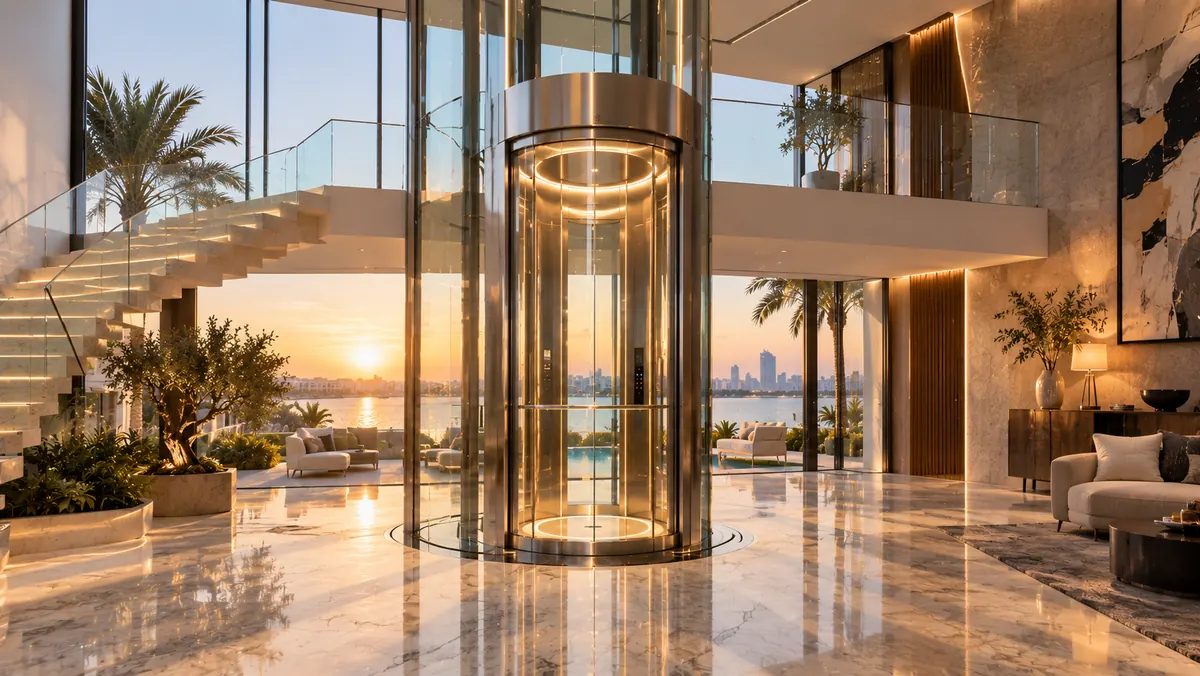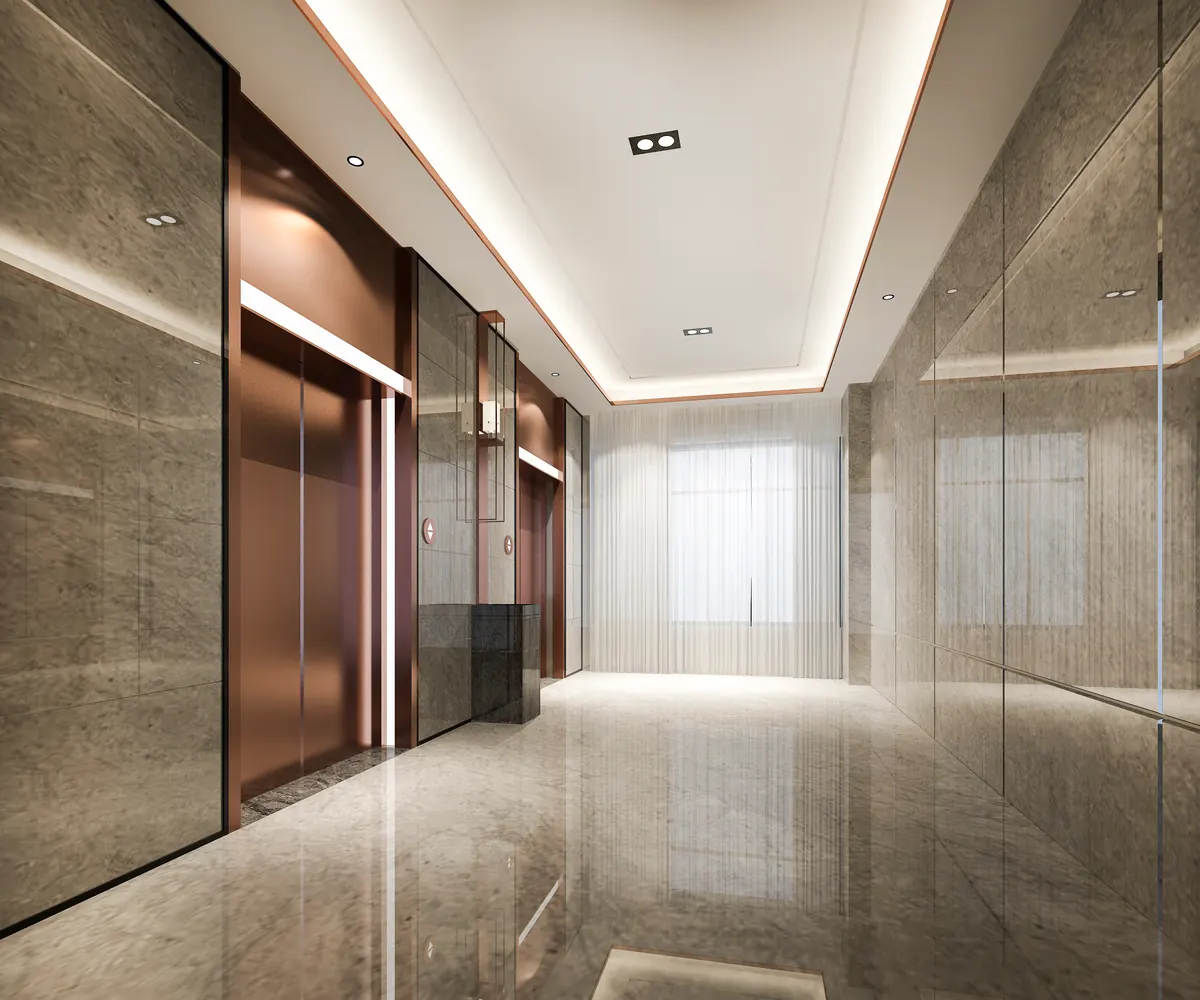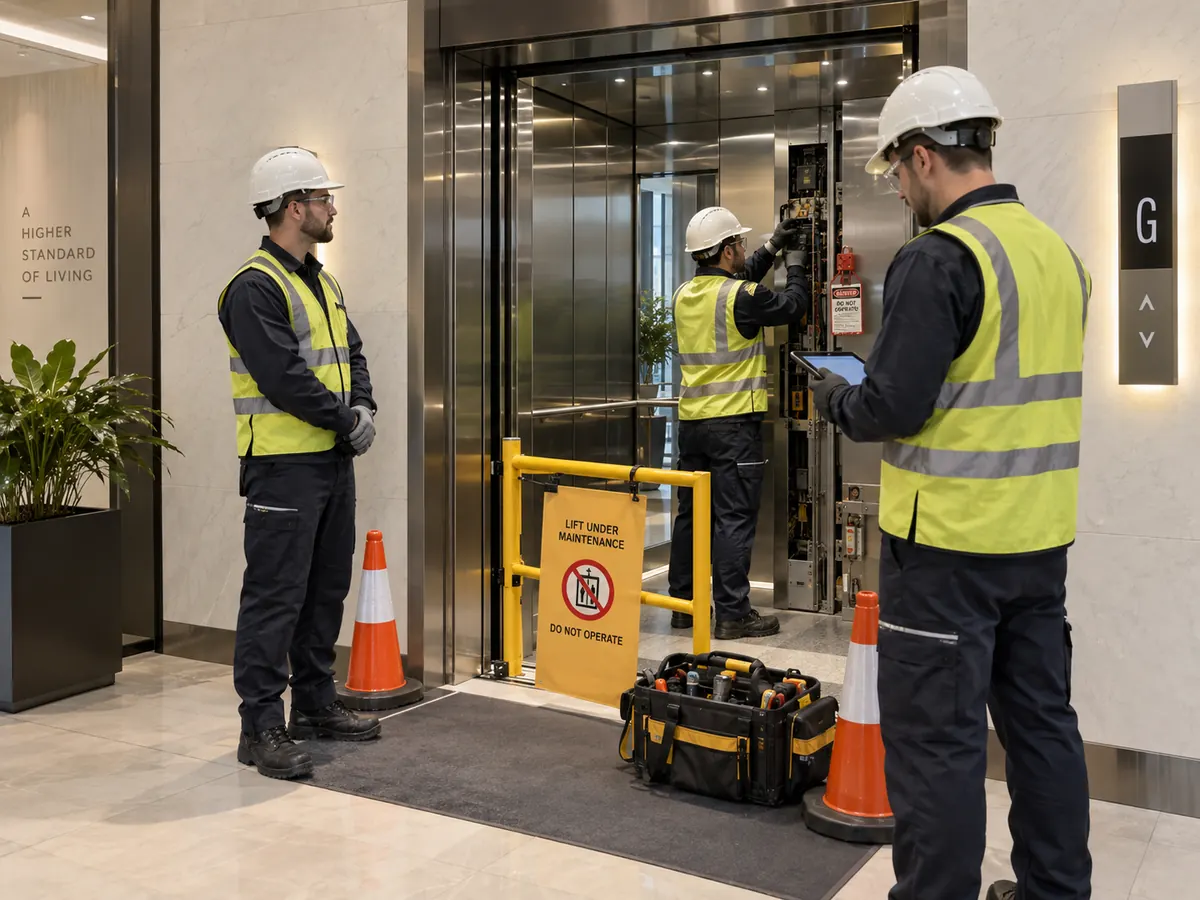
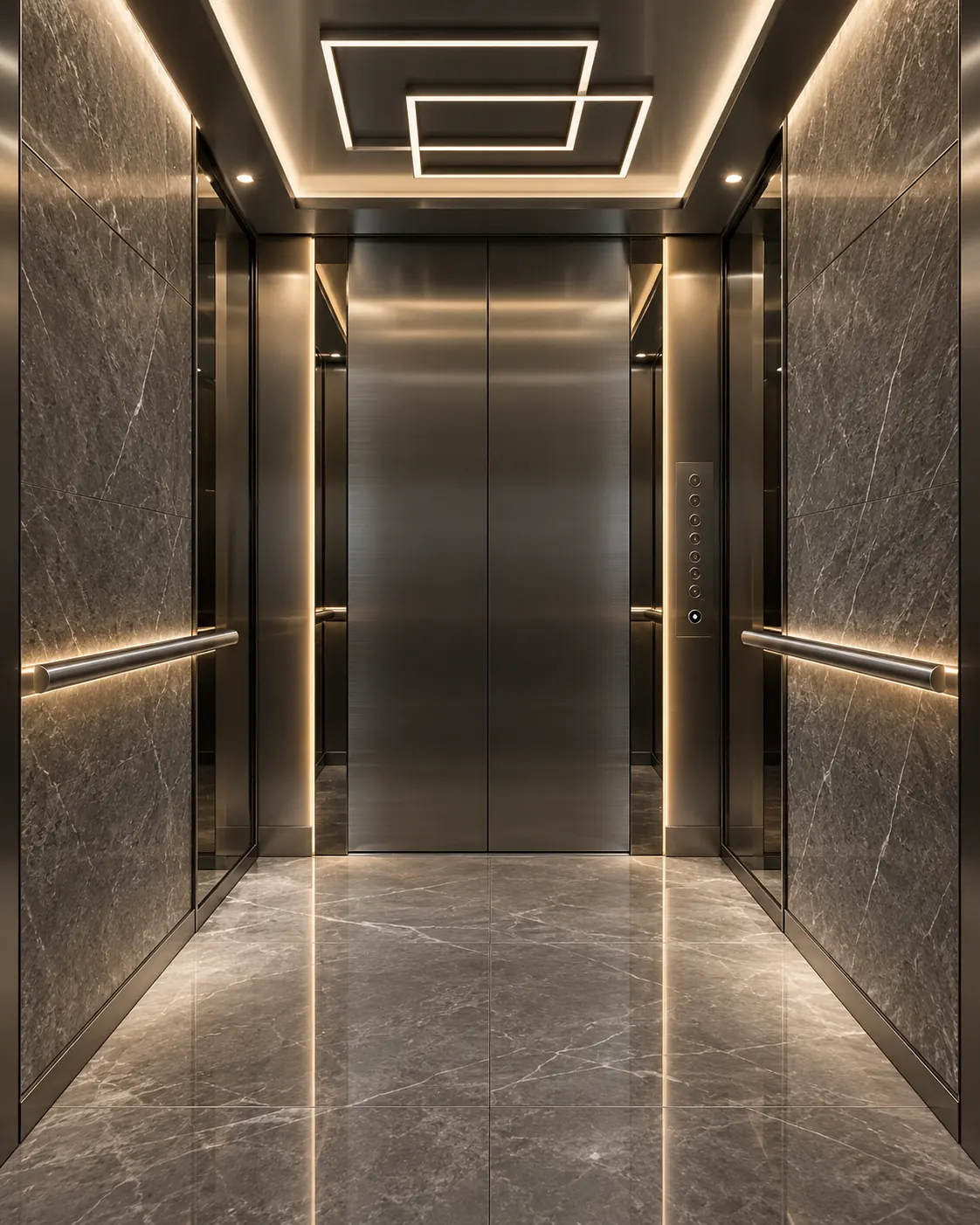
Lift cabin design and interior refurbishment.
If your lift works but its interior no longer suits your home or building, start with the finish, lighting and everyday use you want to improve. Bring photographs of the current cabin and design references. We review what can be retained and what needs replacement before proposing a cabin refurbishment scope.
- Decorative wall panels and cabin finishes
- Ceiling designs and cabin lighting
- Handrails and interior detailing
- Lift flooring and entrance finishes
- Car operating panels, floor indicators and landing call panels
Decorative panels or operating panels?
Decorative panels change the cabin interior. Car operating panels contain the controls passengers use inside the lift; landing call panels are outside at each floor. Tell us which you want to update. A new look, clearer buttons or an indicator change can have different technical requirements, so compatibility must be reviewed rather than assumed from appearance.
Ceilings, lighting, handrails and flooring.
Describe the style you prefer and how the lift is used, including cleaning, accessibility and everyday wear. Finish choices are reviewed alongside the existing cabin, clearances, fixing arrangements and technical requirements. We do not treat heavy floor finishes or new panels as interchangeable decorations; the proposed materials and installation method must be suitable for the lift.
Lift doors, controls and technical upgrades.
Door finishes and landing-door replacement are different scopes. Likewise, changing a passenger button panel is not the same as replacing the lift controller. If you have recurring faults, unreliable doors, ride concerns or outdated controls, share the symptoms and service records. Our survey establishes which modernization options can be proposed for the existing system. No component upgrade or performance improvement is promised before that assessment.
A survey first. A quotation second.
All quotations are issued only after a technical site survey, including cabin decoration, panel changes, modernization, installation and AMC. Photos and an initial brief help prepare the visit; they do not replace it. After reviewing the equipment, site conditions and requested work, we define the scope, exclusions and quotation. We do not publish generic price lists or instant estimates.
- Tell us the location, equipment and changes you want
- Discuss and arrange the technical site survey
- Review the feasible design and upgrade scope
- Receive a quotation based on the surveyed requirements
Identify the reason for change.
Describe the issues or objectives that led to the review. Keep observed problems separate from an assumed technical diagnosis.
- Service history and recurring issues
- Changes in building use or user needs
- Cabin and entrance design objectives
- Access constraints and acceptable disruption
Compare scope before choosing a solution.
Ask a qualified reviewer to establish the equipment condition and compatibility of proposed changes. A component upgrade and a full replacement are different scopes; neither should be recommended solely from age or appearance.
Plan for an occupied building.
Discuss communication, access, sequencing, temporary arrangements and the handover requirements with the building team. Confirm the technical scope and programme in writing before committing to an upgrade.
Repair, refurbishment, modernization or replacement?
These terms describe different decisions. A repair addresses a defined fault; cabin refurbishment changes the interior or finish; modernization updates agreed equipment; replacement involves a new lift scope. A project may combine them, but an attractive new cabin does not by itself resolve unrelated technical faults.
- Repair: assess the reported issue and the equipment involved
- Refurbishment: define panels, ceiling, lighting, flooring and detailing
- Modernization: identify compatible technical changes and retained equipment
- Replacement: compare a new equipment scope and associated building works
Build a retained-and-replaced schedule.
Ask the proposal to list what stays, what changes and how the interfaces will be reviewed. A controller change, operating-panel replacement and landing-door work are not interchangeable packages. Share existing drawings and service records if available. The final scope must address compatibility and the condition of retained equipment rather than assuming that all old components can remain.
Make design choices practical to maintain.
Bring your preferred finishes and explain cleaning, wear and accessibility priorities. Review material samples and fixing details against the assessed cabin constraints before confirming them. Agree responsibility for removal, protection of surrounding finishes and the completed appearance. A design reference is a starting point, not evidence that the same materials fit every lift.
Agree downtime, acceptance and aftercare before work.
For an occupied property, discuss how users will be informed and how the building team will manage access while the lift is unavailable. Request a programme tied to the accepted scope and available parts, with a process for unexpected findings. Agree the records and checks needed at handover, revised maintenance information and the terms applying to new versus retained components.
Questions, answered.
Can I redesign the cabin without replacing the whole lift?
A cabin-only refurbishment may be possible. A technical site survey is required to review the existing system, proposed finishes and installation constraints before confirming the scope and quotation.
How much does lift refurbishment or modernization cost?
We issue quotations only after a technical site survey. The existing equipment, proposed panels and finishes, technical changes, access and agreed work scope determine the quotation. We do not give a random online price.
Does modernization always mean full replacement?
No. The proposed scope needs to follow an assessment of the existing system and the project goals. Compatibility and condition must be reviewed.
Can savings or downtime be guaranteed online?
No project-specific saving, completion date or downtime allowance can be established without evidence and an agreed scope.
Should an old lift always be replaced rather than repaired?
No. Age alone does not determine the right scope. The assessment should consider condition, recurring issues, technical support, compatible parts, building needs and the implications of retaining equipment.
Can I replace the buttons without replacing the controller?
That depends on the existing system and proposed operating panel. Button-panel appearance does not establish electrical or control compatibility. We review the equipment before confirming a panel-only scope.
Can modernization be completed in stages?
Staging can be discussed, but each stage must be technically coherent and suited to the building. The assessment should define interfaces, service interruptions and responsibilities; staged work is not automatically feasible for every system.
Equipment suitability, service availability and site-specific requirements must be confirmed for each project.