Begin with an asset and property profile.
List every passenger lift, service lift, bed lift, freight or cargo lift, dumbwaiter, escalator and moving walkway in scope. Add the manufacturer, model or asset identifier, location, use, status and current agreement where available. Then describe the property’s operating hours, public access, loading activity and shutdown constraints. The same contract label can represent very different work across two properties.
Malls, hotels and offices require circulation planning.
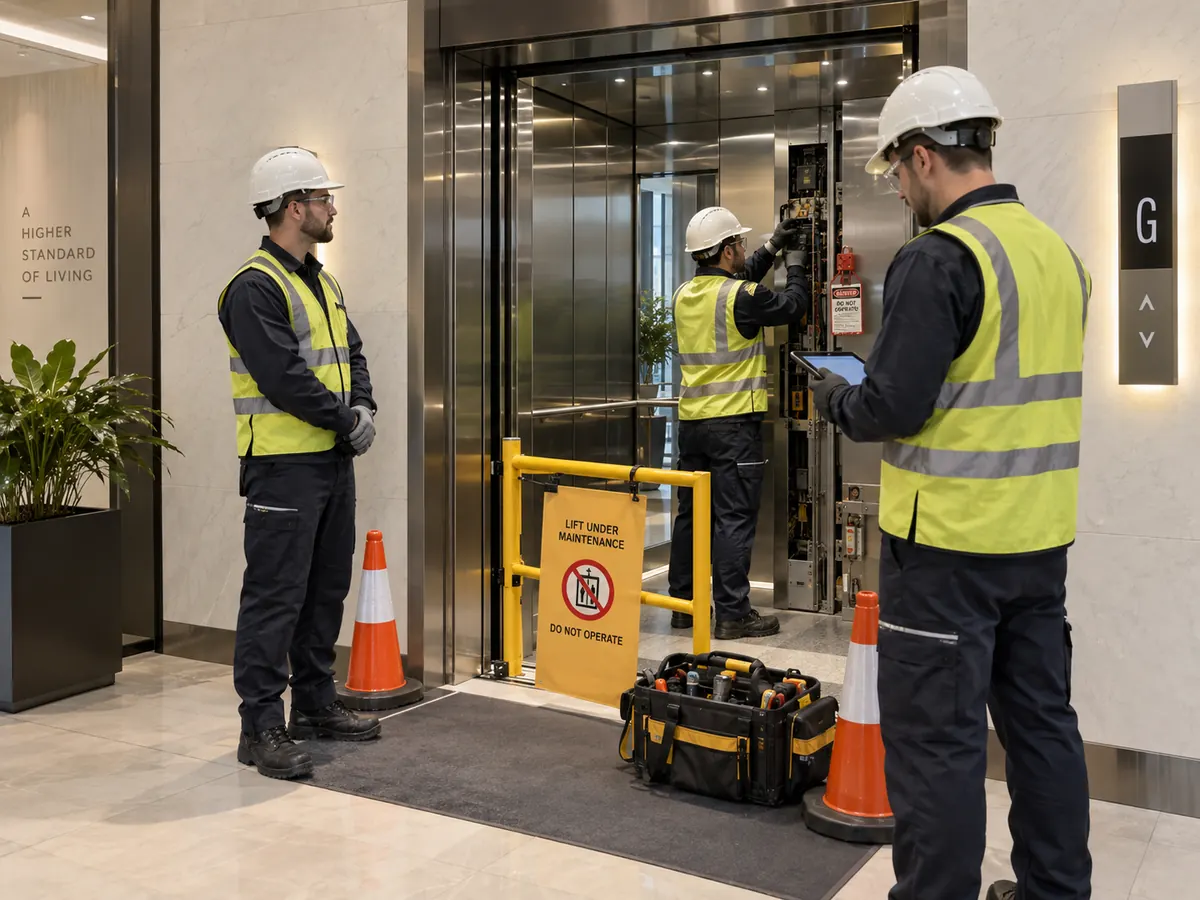
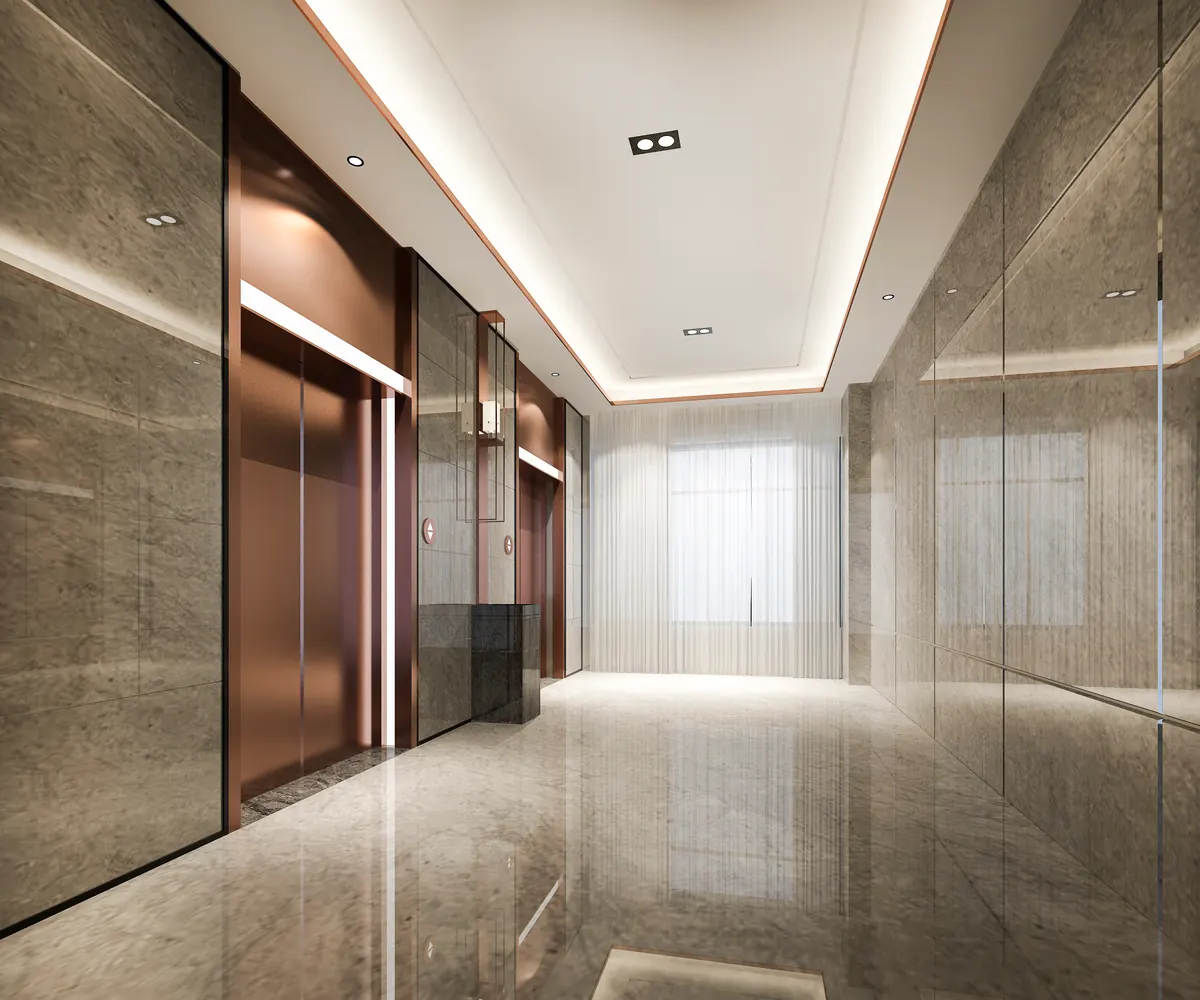
Public-facing equipment affects visitors, tenants, guests and staff. Record peak periods, alternative routes, back-of-house equipment and communication responsibilities. Mall escalators and hotel passenger lifts may require work-area coordination around public circulation; office buildings may have tenant and delivery schedules. These use cases help plan access but do not create a universal visit frequency or response promise.
Public areas
Define barriers, alternative routes, signage responsibilities and who authorizes return to normal use.
Back-of-house areas
Separate passenger circulation from service, deliveries, housekeeping and waste movements where the property brief requires it.
High-rise residential and commercial towers need asset-level reporting.
A tower may contain passenger, service, parking and amenity lifts with different demand. Reports should identify the exact unit, date, observation, work and follow-up rather than combine everything under the building name. Review recurring events with the history of the correct asset. Ask how recommendations are prioritized and approved, and how occupants or tenants are informed about planned shutdowns.
Hospitals and education sites need stakeholder coordination.
Bed, trolley, staff, visitor and service movement can affect the lift brief for healthcare. Schools, colleges and universities have calendars, safeguarding arrangements and peak movement periods. These environments may involve consultant, operational or authority requirements beyond an ordinary commercial contract. Elevaya does not claim clinical, authority or safety approval through this page; project responsibilities must be confirmed.
Warehouses, industrial sites and parking facilities have different loads.
Describe goods, pallets, trolleys, vehicles or service movements and the equipment intended to carry them. Do not use a passenger lift for an unstated goods duty or infer capacity from the words “cargo” or “freight.” Industrial cargo-lift and parking-facility enquiries need the installed equipment and operating environment assessed. Temporary construction hoists are a separate equipment category and are not assumed to be included in a building-lift AMC.
Compare preventive service, repairs and parts treatment.
The AMC should distinguish planned service, reporting, callout arrangements, included labour or parts, existing defects and separately approved repairs. A “comprehensive” heading does not prove that all components are covered. For multi-brand properties, record technical access and parts assumptions for every asset. Identify who approves quotations and how urgent observations are escalated through the property’s procedures.
- Complete asset register and acceptance conditions
- Planned visits and service records
- Operating-hour and access arrangements
- Parts, labour and exclusions
- Fault reporting and approval workflow
- Transition, renewal and handover
Request a portfolio survey before quotation.
Provide the site or portfolio list, current asset register, contracts, recent reports and operational contacts. Elevaya reviews all-seven-Emirate enquiries, but coverage does not imply a local branch or identical attendance terms in every location. The survey confirms accepted equipment and a practical scope. Pricing follows that work; no generic mall, hotel, high-rise, warehouse or hospital AMC price is published.
Match the commercial contract to the building duty.
A high-rise residence, hotel, hospital, office, mall, warehouse, industrial property and multi-storey parking facility each has different users, operating hours, access controls and business consequences when equipment is unavailable. Identify passenger, bed, goods, car, service, escalator and moving-walk assets separately. Heavy-use is an operating description, not a universal maintenance frequency; the assessed equipment and written contract determine the plan.
Coordinate shutdowns, alternatives and reporting.
For public or operational properties, plan barriers, alternative routes, loading or guest movement, building communications and the person authorized to return equipment to service. Portfolio reporting should identify the exact asset, observation, action, open recommendation and approval status. A 24/7 support statement does not replace the site escalation matrix or contract-specific attendance terms.
Questions, answered.
Can one company maintain lifts and escalators across several UAE sites?
A multi-site scope can be assessed. Each property and asset must be identified, with access, equipment acceptance, service arrangements and exclusions agreed in writing.
What belongs in a commercial lift AMC?
At minimum, define the assets, planned service, reporting, callout process, parts and labour treatment, exclusions, existing defects, approvals, renewal and handover.
Do hospitals and malls use the same maintenance contract?
Not automatically. Equipment, users, operating constraints, specialist criteria and property procedures differ. The contract should follow the surveyed site and asset portfolio.
Can you quote a high-rise AMC from the lift count alone?
No. Brand, model, condition, technical access, records, use, parts treatment and contract responsibilities must be reviewed before quotation.
Do you provide mall escalator and hotel lift maintenance contracts?
Mall, hotel and other commercial portfolios can be assessed. Share the asset list, operating constraints and current records; the accepted equipment and service arrangements are then defined in writing.
Can you maintain warehouse freight lifts and parking car lifts?
Freight, cargo and car-lift assets can be reviewed as distinct equipment categories. Load duty, users, condition, technical access, records and parts route must be confirmed for each unit.
Equipment suitability, service availability and site-specific requirements must be confirmed for each project.