Identify every asset.
Check that the contract names the equipment it covers. Keep the equipment list, building location and current condition information together so that scope changes can be tracked.
Ask six practical questions.
Request clear answers in the proposal, not only during a sales call.
- Which planned service activities and visits are included?
- Which parts and labour are included or excluded?
- How are callouts requested and handled?
- What service records and reports will the building receive?
- Who approves additional work and quotations?
- What are the renewal, termination and handover arrangements?
Record exceptions and responsibilities.
Clarify access, building-team responsibilities, pre-existing defects and any conditions attached to accepting the equipment. Do not infer a guaranteed response time or emergency coverage from the word “maintenance”.
Build a comparison sheet you can actually use.
Create one column for each proposal and one row for each heading below. Record the wording and document reference, not a tick based on a sales conversation. If a point is unclear, mark it “not confirmed” and request a written answer. This is an operational comparison aid, not legal advice or a standard Elevaya contract.
- Named lifts, site and condition recorded at acceptance
- Planned activities, visit arrangements and visit reports
- Parts and labour included; specific exclusions
- Callout channel, service hours and attendance terms
- Existing faults and separately approved corrective work
- Technical-access and spare-parts limitations
- Term, renewal, notice and handover arrangements
Test the scope with an example, not an assumption.
Consider an illustrative case: a door-related issue is recorded before a new AMC begins. Ask whether that existing issue is included in acceptance work, excluded or subject to a separate quotation. Then ask how a later fault would be assessed under the agreement. This example is not a diagnosis, advertised package or promise that every door component is covered.
Ask what a useful service report will contain.
A building team needs to be able to connect a visit with the correct unit and follow-up action. Ask for an example report with customer details removed, or a description of the fields supplied. Clarify who receives it and how open recommendations are tracked.
- Date, site and equipment identifier
- Work recorded and observations
- Recommended follow-up and any separate approval needed
- Status of previously reported issues
- Recipient and next agreed action
Plan renewal and provider handover.
Before the changeover, gather available records and list unresolved matters. Confirm the end and start dates, site-access contacts and document handover with the relevant parties. Review warranty or technical-access restrictions before assuming another company can accept every unit. Do not upload confidential contract or occupant details into the website brief builder.
Turn the comparison into a survey brief.
Send the site, asset count, known manufacturer/model, available service history and the scope you want reviewed. Identify existing faults separately from general maintenance requirements. Elevaya issues an AMC quotation only after a technical site survey. Agreed callout arrangements belong in the accepted scope, not in assumptions drawn from the word “comprehensive”.
Use a site schedule for city and community coverage.
A lift maintenance contract for one villa is different from a portfolio request covering several communities. Record the Emirate, city, community, building reference and asset count for each site. For a Dubai portfolio spanning JVC, JVT and Arjan, do not combine all units under an unnamed “Dubai lifts” line. Apply the same discipline to sites in Abu Dhabi, Al Ain, Sharjah and the northern Emirates, with separate access contacts, contract dates and unresolved recommendations.
Owner’s maintenance checklist: records, not do-it-yourself tests.
This checklist helps the building owner manage service information. Record equipment identity, contractor contacts, the planned visit schedule, latest report, outstanding defects and the person responsible for approving work. If passengers report poor levelling, unusual movement, door problems or communication faults, report the observation through the agreed service route. Do not open panels, enter shafts or pits, or attempt safety-device tests.
Prepare for inspection without confusing it with maintenance.
Keep installation and handover documents, maintenance reports, repair records and previous inspection findings available to the responsible inspection body. Ask who arranges the applicable inspection, what access and documents are needed, how findings will be closed and whether fees are included. A completed owner checklist is not a statutory certificate or an independent technical inspection.
What a useful lift-under-maintenance notice should contain.
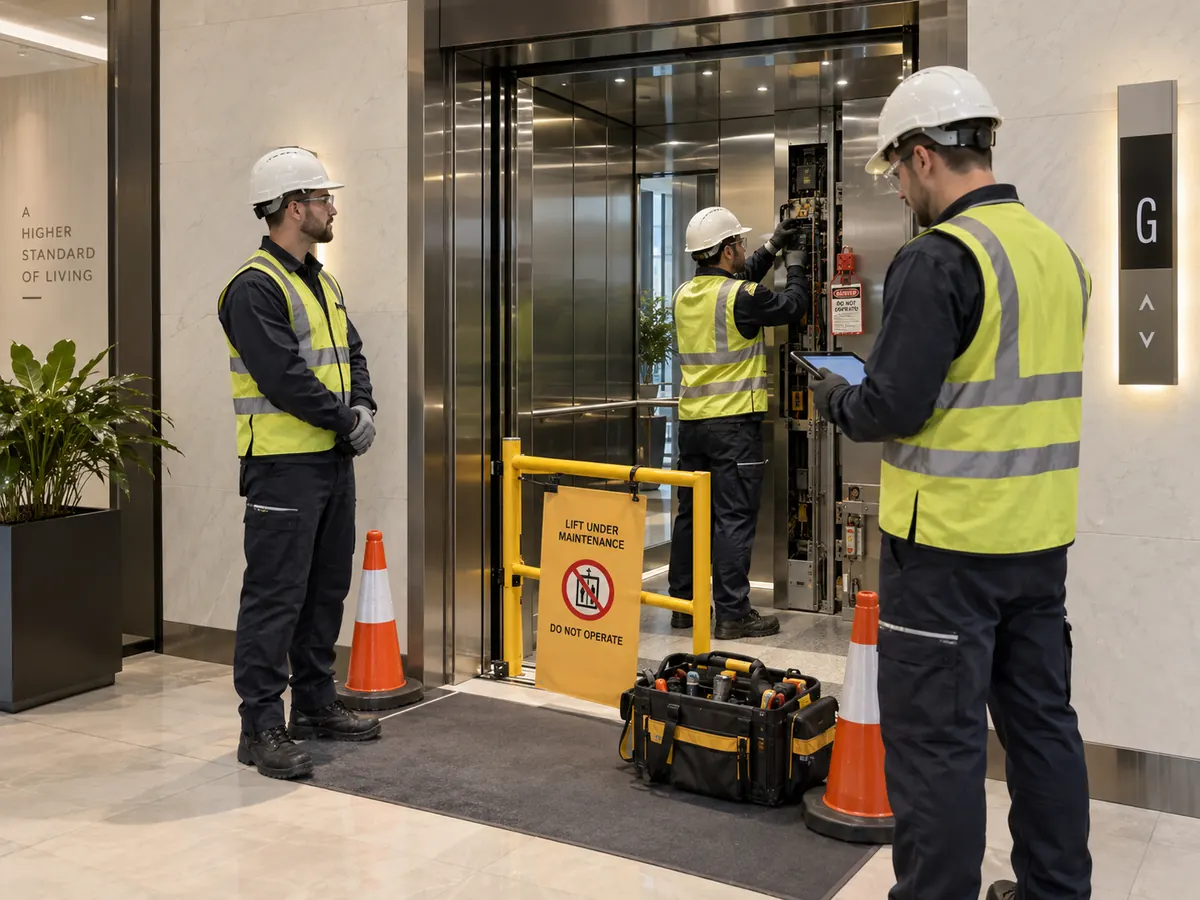
Identify the affected lift, when it was taken out of service, the responsible building contact and any safe alternative route. State a reopening estimate only when confirmed, update the notice if plans change and communicate in the languages building users need. A notice supports communication; it does not replace the contractor’s work-area controls or authorize anyone to restore the lift to service.
Questions, answered.
What should a building owner include in a lift maintenance checklist?
Include lift identity, service contacts, visit programme, latest reports, open defects, repair approvals and applicable inspection records. Log passenger observations and pass them to the maintenance provider. Technical testing, adjustments and safety-device checks must be performed by qualified personnel rather than copied from an online checklist.
Is a maintenance checklist the same as a passenger lift inspection certificate?
No. A checklist organises observations or service records. An inspection certificate is issued through the applicable inspection process by the responsible body. Confirm the required inspection scope, provider, records and validity for the actual building; a website worksheet cannot certify a lift.
Is a comprehensive AMC always better?
The label alone is not enough to compare. Check covered equipment, parts, exclusions, service arrangements and your building’s requirements against the actual written proposal.
Should I select the lowest annual total?
First establish whether the proposals cover equivalent assets and responsibilities. A different total may reflect different parts coverage or exclusions; unresolved scope should be clarified before deciding.
Does every AMC include emergency attendance?
The service hours, contact process, escalation route and attendance commitments are written into the applicable AMC. Elevaya offers 24/7 service support, while the agreed response arrangement reflects the site, equipment and selected contract.
Elevaya develops every project around the surveyed equipment, building and agreed service scope.