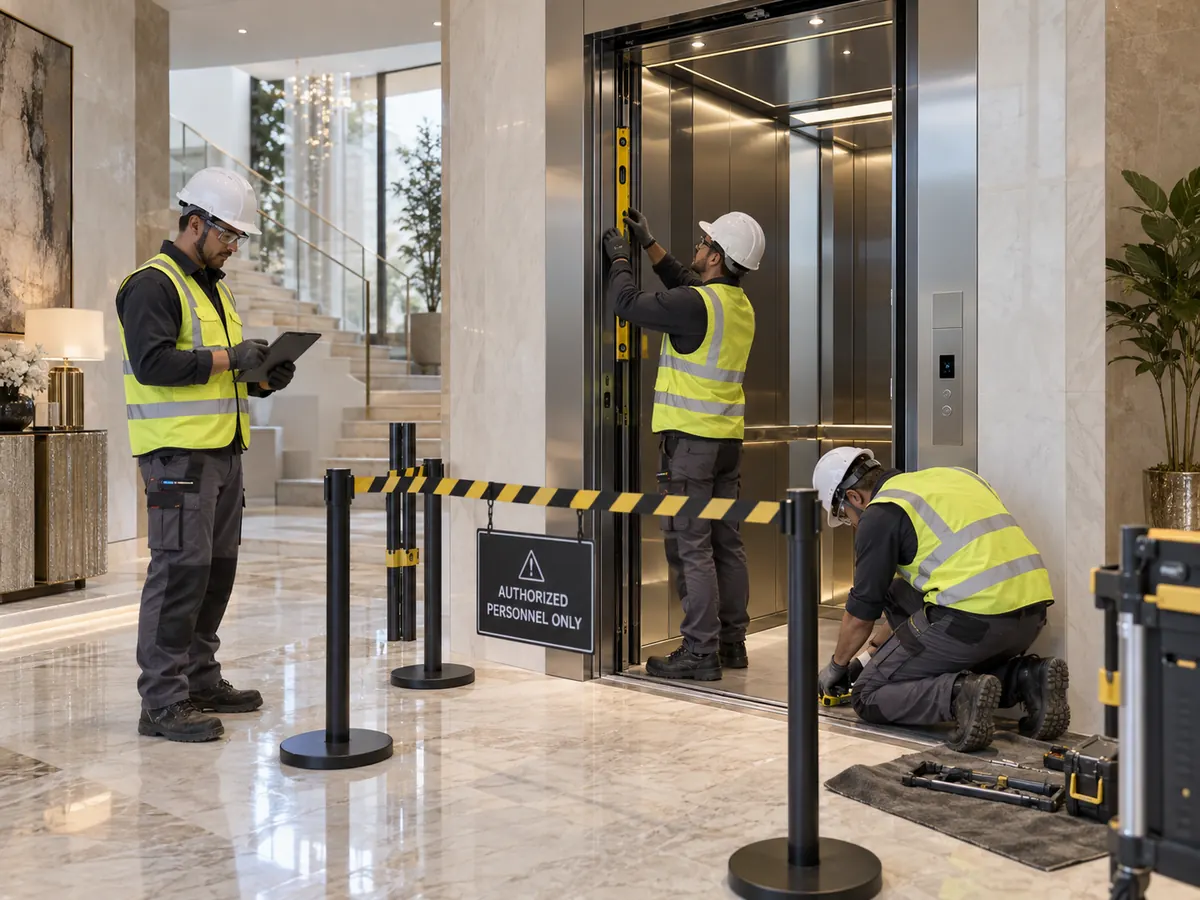
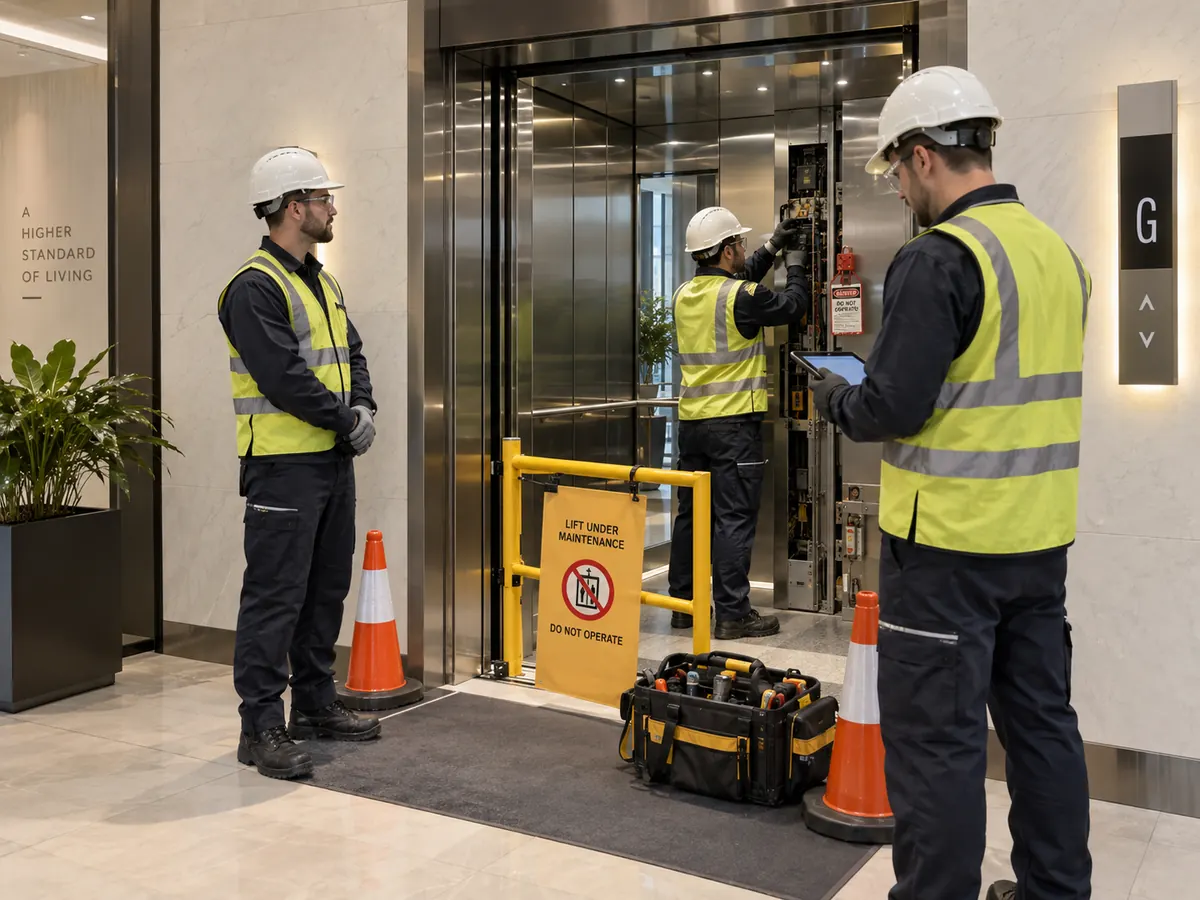
An enquiry is not an emergency dispatch request.
For an active incident or an immediate safety concern, use the building’s established emergency arrangements rather than waiting for a website quotation reply. Do not force lift doors, attempt a rescue, reset restricted equipment or bypass safety systems. This page does not offer remote diagnosis, a guaranteed arrival time or permission to continue using equipment with a reported safety concern.
What should you tell us about the fault?
Describe what was observed without trying to identify the failed component. Door behaviour, stopping or starting concerns, floor indication, unusual noise and recurring interruptions can be reported for assessment. Similar observations can have different causes, so a photo, video or fault description alone is not enough to determine the repair.
- Building location and the affected lift’s identification
- Manufacturer and model, if already known
- What happened, when it happened and whether it has recurred
- Available service reports and previous corrective work
- The building contact who can coordinate safe access
Door repairs and controls: identify the equipment before ordering parts.
A landing door, cabin door, operating panel and main controller are different parts of the system. Tell us where you noticed the issue, but do not open covers or restricted areas to investigate. The assessment establishes the equipment involved, the condition and the compatible repair scope. A similar-looking part is not evidence that it can be fitted to your lift.
From assessment to a written repair scope.
The survey should establish what can be assessed on site, what records are available and whether further technical information is needed. Before authorizing work, ask for the proposed corrective action, parts and labour, exclusions, access requirements and relevant handover checks. If further findings change the scope, agree how they will be documented and approved rather than treating the initial enquiry as an open-ended instruction.
Multi-brand repairs and spare-parts availability.
We work with lift brands including OTIS, Mitsubishi Electric, KONE, Schindler, TK Elevator and Chinese manufacturers, subject to equipment acceptance, technical access and suitable parts. Elevaya is an independent service provider, not presented as an authorized manufacturer representative. Brand names identify equipment only. We do not promise stock, universal compatibility or continuation of a manufacturer warranty without checking the actual terms and equipment.
Is the repair already covered by your AMC?
Check the current agreement before comparing a separate repair proposal. Coverage depends on the named assets, included parts and labour, exclusions and treatment of existing defects. Ask the current provider or building team for the relevant records. If the work is outside the AMC, a clearly separated scope helps avoid confusion between ongoing maintenance and one-off corrective work.
Recurring problems: repair or modernization review?
Keep repeat reports tied to the same asset and review them with the maintenance history. Ask what has been assessed, what was previously changed and what follow-up remains. A wider modernization review may be appropriate when the desired outcome extends beyond one fault, but repeated callouts alone do not establish the cause or justify automatic full replacement.
What affects the repair quotation and programme?
The assessed fault, equipment identification, suitable parts, access arrangements and agreed work determine the proposal. Required information or component availability may affect the programme. All quotations are issued only after a technical site survey. We do not publish a generic lift-repair price, promise a same-day fix or guarantee performance before the scope is established.
Local repair enquiries: what helps us plan the assessment?
For a home lift in Palm Jumeirah or District One, explain whether the property is occupied and who can authorize the survey. For building lifts in Arjan, JVC, Al Barsha or Business Bay, name the affected unit so reports are not mixed between lifts. Across Abu Dhabi, Al Ain, Sharjah and the other Emirates, provide the building location and responsible site contact. These are service areas, not a promise of immediate dispatch or evidence of a particular fault.
Keep a fault record without attempting a diagnosis.
Record the date, the lift identifier, the observation and the reference for any previous report. For example, “door did not complete its usual movement at the third floor” describes an observation; it does not identify a faulty sensor or prove a particular part is needed. Ask building management to retain available service records. Do not recreate a fault, operate restricted controls or enter a shaft to gather information. The technical assessment establishes the repair scope.
Describe jerking, noise and door behaviour without diagnosing the lift.
“Jerky,” “noisy,” “slow” and “door sensor problem” are useful observations, but not confirmed causes. Record the exact unit, floor, direction, time, frequency, indicator message and what users experienced. Do not keep operating equipment that the responsible site team has removed from service, and do not open doors, panels or restricted areas to collect evidence.
- Unexpected movement, vibration or levelling observation
- Noise location and when it occurs
- Door reopening, failure to close or repeated obstruction response
- Indicator, call-button or operating-panel behaviour
- Recent work, water exposure or other known event
Sensors, ropes, controls and parts require equipment identification.
Door sensors, ropes, rollers, boards, buttons and other parts cannot be selected from a symptom or photograph alone. The installed component, interfaces, condition and compatible replacement route must be established for the actual lift. Rope work, door work and control changes also require the associated checks and written scope; a keyword is not permission to replace a component.
24/7 support does not turn a website form into rescue dispatch.
Elevaya provides 24/7 service support, with attendance and escalation commitments defined for the accepted site and contract. For a trapped person, injury, fire, smoke, flooding or immediate safety concern, use the building’s established emergency and maintenance channels. Do not attempt a rescue or bypass a safety system while waiting for an online reply.
Choose a lift repair company by capability, not proximity alone.
A “lift repair near me” search is often made when a fault is disrupting a home or building. Location matters for coordination, but the first questions are whether the provider can accept the installed brand and controller, obtain compatible parts and work within the building’s access rules. Share the fault message, lift identification and recent service report if available. Elevaya assesses the equipment and confirms the repair scope after inspection; an online symptom is not a diagnosis.
Lift breakdown service begins with safe triage.
For an active breakdown, follow the building’s established emergency and rescue arrangements first. Do not force doors, enter the shaft or restricted equipment areas, or bypass a safety device. The building contact should record the affected lift, displayed message, time, floor and whether anyone is trapped, then use the approved emergency channel. A website enquiry can start a repair review for a non-rescue case, but attendance, response time and 24/7 coverage are confirmed for the location, equipment and accepted service arrangement.
Questions, answered.
Can you price a repair from photos or a WhatsApp message?
Photos and messages help prepare the assessment, but they do not replace a technical site survey. Elevaya issues the quotation only after surveying the equipment and defining the work.
Do you repair lifts installed by another company?
Yes, we review multi-brand lift repair enquiries. Acceptance depends on the manufacturer/model, technical information and access, parts availability, existing conditions and proposed work.
Does a lift door problem always mean the door must be replaced?
No conclusion should be drawn from the symptom alone. The affected equipment and cause need assessment before a repair, component change or wider replacement can be proposed.
Can I reset the lift myself before your visit?
Do not attempt technical resets or access restricted equipment. Report the issue through the building’s established maintenance or emergency arrangements and follow the instructions of the responsible qualified personnel.
Do you offer a guaranteed repair response time?
No universal response time or emergency coverage is advertised here. Attendance and work arrangements must be confirmed for the site and applicable service agreement.
Can you assess escalator or moving walkway repairs too?
Yes. Share the equipment type, location, manufacturer and available records. The escalator and moving-walkway product pages explain the separate planning and maintenance considerations; the repair scope is confirmed after assessment.
Can you repair a jerky or noisy villa elevator?
A villa lift showing unexpected movement or noise can be assessed. Stop informal troubleshooting and provide the asset details and observations; the cause and corrective scope are confirmed only after technical review.
Do you replace elevator door sensors and lift ropes?
These components can be assessed for repair or replacement. Equipment identity, compatibility, condition, associated checks and parts availability must be confirmed before quotation.
Is this an emergency lift rescue service?
No. The website is not a rescue-dispatch channel. For a trapped person or immediate danger, follow the building’s established emergency arrangements and contact the responsible emergency and maintenance parties.
Can Elevaya repair a lift installed by another company?
We assess multi-brand lifts, including equipment installed by other companies. Acceptance depends on the installed system, technical access, compatible parts, records and condition found during inspection. Manufacturer names do not imply dealership or authorization.
Is the website form an emergency lift-rescue channel?
No. For entrapment or immediate risk, use the building’s established emergency and rescue contacts. The website form is for repair and service enquiries and does not dispatch a rescue team.
Equipment suitability, service availability and site-specific requirements must be confirmed for each project.