What type of elevator does a laboratory need?
A laboratory is not a single lift specification. Staff may need an accessible passenger elevator, equipment deliveries may need a goods-passenger lift and small service items may suit a goods-only service lift. Start with the intended load, whether a person travels with it, the floors connected and the loading method. These choices determine the equipment category before any finish is selected.
People and equipment travelling together
If staff accompany a trolley or piece of equipment, select a lift category approved to carry people for that duty. Record the combined load, entrance clearance and usable cabin space.
Goods-only transport between floors
A goods-only lift or suitable service lift can support a defined logistics route. It is not a passenger elevator, and staff must not ride in equipment designated for goods only.
How can the lift be customized for lab trolleys and equipment?
We coordinate clear entrances, cabin or platform dimensions, rated load, floor finish, wall protection and loading interfaces. For a tall trolley or fragile instrument, include the maximum overall dimensions, centre-of-gravity concerns and any handling limits supplied by its manufacturer. The proposal should show how the load reaches the entrance, passes the threshold and exits at the destination, rather than merely showing that it fits inside.
- Loaded trolley or equipment dimensions, weight and handling method
- People accompanying the load, if any
- Landing approach, turning space and entrance sides
- Floor, sill and protective-finish details
- Staff access, floor permissions and agreed communication interfaces
What changes when the route meets a cleanroom?
Identify whether the lift is outside the controlled area, opens at its boundary or forms part of a specialist transfer route. Your cleanroom and process designers define the environmental criteria and transfer procedures. We coordinate the lift interfaces against that brief. ISO 14644-14:2026 addresses equipment suitability for airborne particle cleanliness; it does not establish biological safety, chemical compatibility or cleaning-method suitability. Those need their own assessment.
Finishes, zoning and controlled access
The specification can include cleanable wall and floor finishes, protected edges, access-controlled landings and coordinated entrance arrangements where the selected system supports them. Agree the cleaning chemicals and methods with the facility team so finishes and components can be checked for compatibility. Stainless-steel appearance alone does not establish a cleanroom rating, sterile transfer, chemical resistance or hazardous-area suitability. Special requirements must be written into the procurement brief.
Samples, chemicals and other specialist loads
Tell the responsible laboratory safety and logistics team what the route will carry, including any sealed sample carriers, chemicals or other controlled goods. That team determines the approved handling and segregation procedures. Our lift scope then addresses the agreed load, equipment category and building interfaces. This service covers building transport; pneumatic specimen tubes, in-room patient hoists and process-vessel lifting machinery are separate systems.
Installation, modernization and maintenance for working labs
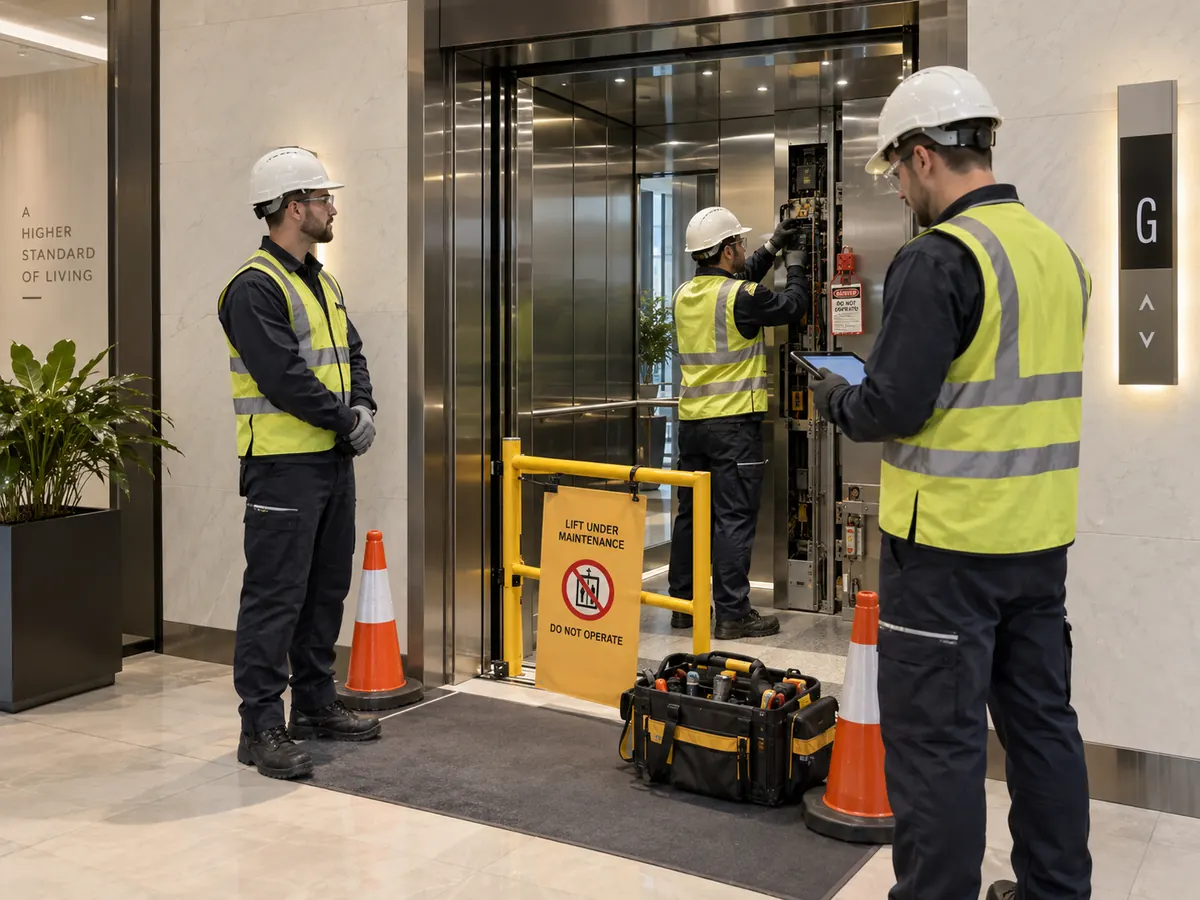
For an occupied laboratory, the programme must identify delivery access, protected work areas, interruption windows and commissioning arrangements. Existing lift upgrades may address doors, controls, damaged finishes or a changed logistics route, subject to equipment assessment. Maintenance planning includes access restrictions and facility procedures, not simply a generic visit frequency. We document the accepted units, work scope, reporting and additional-work approval route.
Request a laboratory lift proposal in the UAE
Send the emirate, building type, floors, drawings, intended load and whether people accompany it. Include the facility’s environmental brief, loading route, planned operating hours and specialist interface requirements. Elevaya coordinates supply, installation, testing, handover and maintenance across the seven Emirates, with the selected manufacturer and project specialists defining any controlled-environment package. A technical survey and agreed equipment schedule form the basis of the quotation.
Questions, answered.
Can you supply a laboratory service lift or dumbwaiter?
We can assess service and goods-only lift options for an agreed laboratory logistics duty. Selection depends on the load, whether people travel, landing openings and the facility’s handling procedures.
Is every stainless-steel lift suitable for a cleanroom?
No. Appearance does not prove environmental suitability. The lift, landing interfaces, materials and operating procedures need to be assessed against the actual controlled-environment specification.
Can laboratory staff ride with an equipment trolley?
Only in equipment approved for carrying people for the specified duty, with suitable rated load, space and entrances. They must not ride in a goods-only service lift.
Do laboratories need special escalators?
Escalators serve walking passengers in public circulation areas where specified; they are not a substitute for laboratory trolley, goods or wheelchair routes. The lab transport brief should identify the appropriate passenger or goods lift.
Do you offer GMP-certified or sterile elevators as standard?
No blanket certification is offered. Any cleanroom, GMP-related, biological, chemical or hazardous-area requirement must be defined by the facility specialists and addressed by the selected equipment and documented project scope.
Elevaya develops every project around the surveyed equipment, building and agreed service scope.