Define what moves before selecting the lift.
A goods lift for boxed stock, a service lift for hotel trolleys and an industrial freight lift do not share one standard brief. Record the typical and exceptional loads, their dimensions, how they enter, who travels with them and how frequently the equipment operates. State clearly if passengers must accompany goods; the equipment category and operating rules must match the intended use.
- Goods, trolley, pallet or equipment dimensions
- Expected load and loading method
- Floors, travel and entrance arrangement
- Operating hours, peaks and shutdown constraints
- Indoor, outdoor or exposed environment
Coordinate entrances, landings and material flow.
The lift is one part of a route. Review corridors, loading bays, turning space, door clearances and the transition from vehicle or storage area to each landing. Door and cabin finishes should reflect impact, cleaning and corrosion risks. Final dimensions, structural interfaces and finishes are confirmed for the selected equipment and surveyed building.
New installations need a written interface schedule.
For a new warehouse, retail unit, hotel or mixed-use building, clarify who coordinates builder works, power, access, storage, assembly and protection of completed areas. For an existing property, document occupancy, working hours and temporary goods routes. Elevaya can coordinate municipality or relevant authority steps within the agreed project scope; approvals remain subject to the responsible authority and submitted design.
Maintenance follows usage and equipment condition.
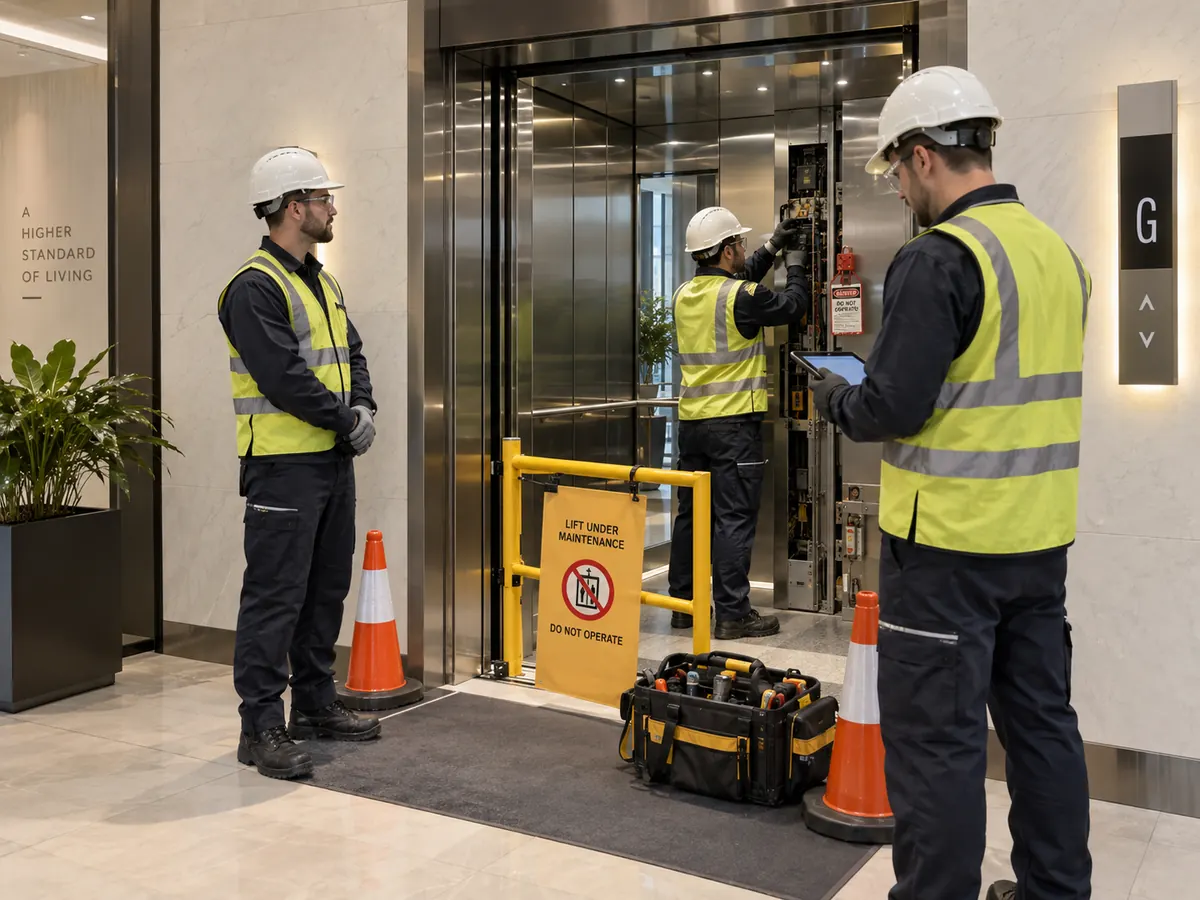
Freight lifts may show wear differently from passenger equipment because of loading, doors, trolleys and operating patterns. A maintenance proposal should identify the asset, current condition, service records, planned visits, reports, parts treatment and repair approval path. Elevaya provides 24/7 service support, while site attendance terms and any response commitment are stated in the contract rather than assumed from the website.
Repairs and OEM parts require equipment identification.
Share the manufacturer, model, serial or asset number and available manuals before parts are proposed. Elevaya can source and work with OEM parts where specified and available, alongside suitable compatible solutions when the agreed technical scope permits. No part is promised from a symptom alone; access, compatibility, condition and lead time must be checked.
Prepare a technical survey pack.
Send the Emirate and exact site, building use, project stage, floors or travel, entrances, intended users or goods and the site contact. For existing equipment, add the manufacturer, model or asset number, current maintenance arrangement, available manuals and service reports, and a factual description of observed issues. Photographs and drawings help the team prepare, but they do not confirm dimensions, condition or suitability. Do not enter shafts, pits, machine areas or restricted equipment to collect information.
- Location, building use and responsible contact
- New project, existing equipment or replacement
- Drawings, asset details and records available
- Access, occupancy and shutdown constraints
- The outcome you need from the survey
Follow the project from decision to handover.
After the survey, the proposal should define accepted equipment, responsibilities, assumptions, exclusions, programme dependencies and the route for changes. Before work begins, confirm access, building interfaces, authority or consultant coordination and who approves additional work. At handover, retain equipment identity, agreed test or inspection records, operating information, warranty terms and maintenance arrangements. Elevaya does not offer an instant online price because these facts materially change the safe and commercial scope.
Compare a surveyed proposal, not a price per floor.
A reliable quotation separates equipment, entrances, finishes, installation, builder and electrical interfaces, testing, authority coordination, handover, warranty and maintenance. Elevaya provides written warranty coverage as defined in the accepted quotation or contract. There is no responsible universal freight-lift price: the survey and project brief determine the scope.
Goods lift, cargo lift or passenger-and-goods movement?
Define exactly what will travel. A goods-only lift, service lift, freight elevator and equipment intended to carry authorised passengers are not interchangeable labels. Record the goods, handling method, trolley or pallet sizes, loading pattern, staff access, route and landing environment. If people must accompany the load, state this at the start so the consultant and project team can assess the correct equipment category and requirements. Never use a goods-only system for passengers unless its accepted design and operating rules expressly allow it.
Questions, answered.
What is the difference between a freight lift and a passenger lift?
The intended users, loading method, finishes and equipment requirements differ. Do not place people or goods in equipment that is not designed and approved for that use; define the duty before selection.
Can you install a cargo lift in an existing warehouse?
Existing-building projects can be assessed. Structure, space, entrances, loading routes, power, access and ongoing operations must be reviewed before feasibility and scope are confirmed.
Do you maintain multi-brand goods lifts?
Yes, subject to equipment acceptance, technical access, documentation and suitable parts. Brand names identify installed equipment and do not imply manufacturer affiliation.
How much does a freight lift cost in the UAE?
Pricing depends on the surveyed duty, building, travel, entrances, finishes, installation interfaces and authority requirements. Elevaya issues quotations only after a technical site survey.
Can staff travel in a goods or cargo lift?
Do not assume so. The accepted equipment category, design, documentation and operating rules determine whether people may travel. State the intended passenger-and-goods use before selection and obtain project-specific professional confirmation.
Equipment suitability, service availability and site-specific requirements must be confirmed for each project.