Start with the application, then select the configuration.
The Fuji Japan range presented to Elevaya includes passenger and home elevators, panoramic or observation lifts, hospital lifts, freight lifts, car lifts, dumbwaiters, escalators and moving walks. That range does not make every configuration suitable for every building. The first discussion should identify the property type, users, traffic, floors, entrances, available shaft or enclosure, project stage and required handover. Elevaya then coordinates an equipment proposal for the actual site rather than treating a catalogue image as the specification.
Passenger and home lifts need a complete design brief.
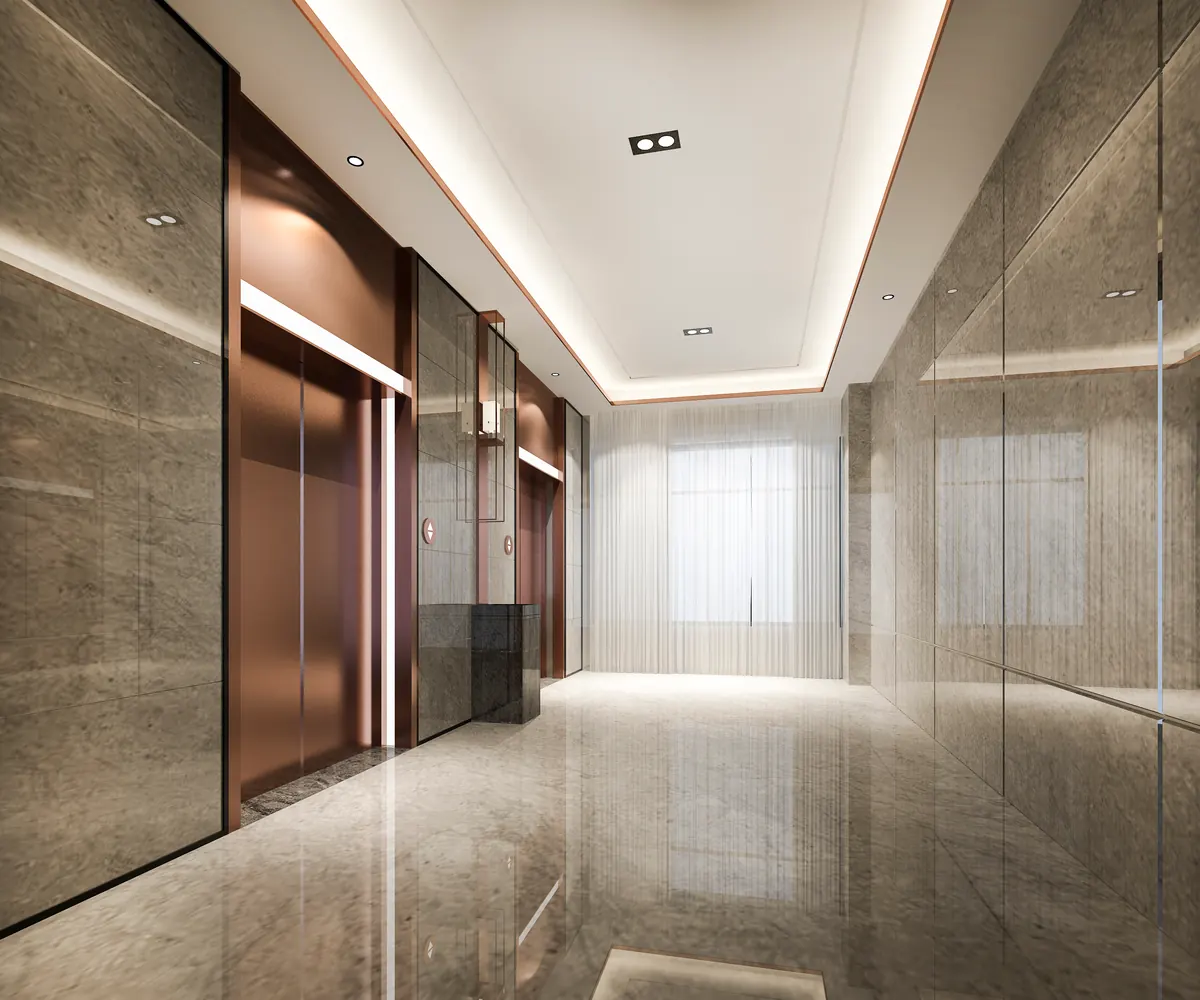
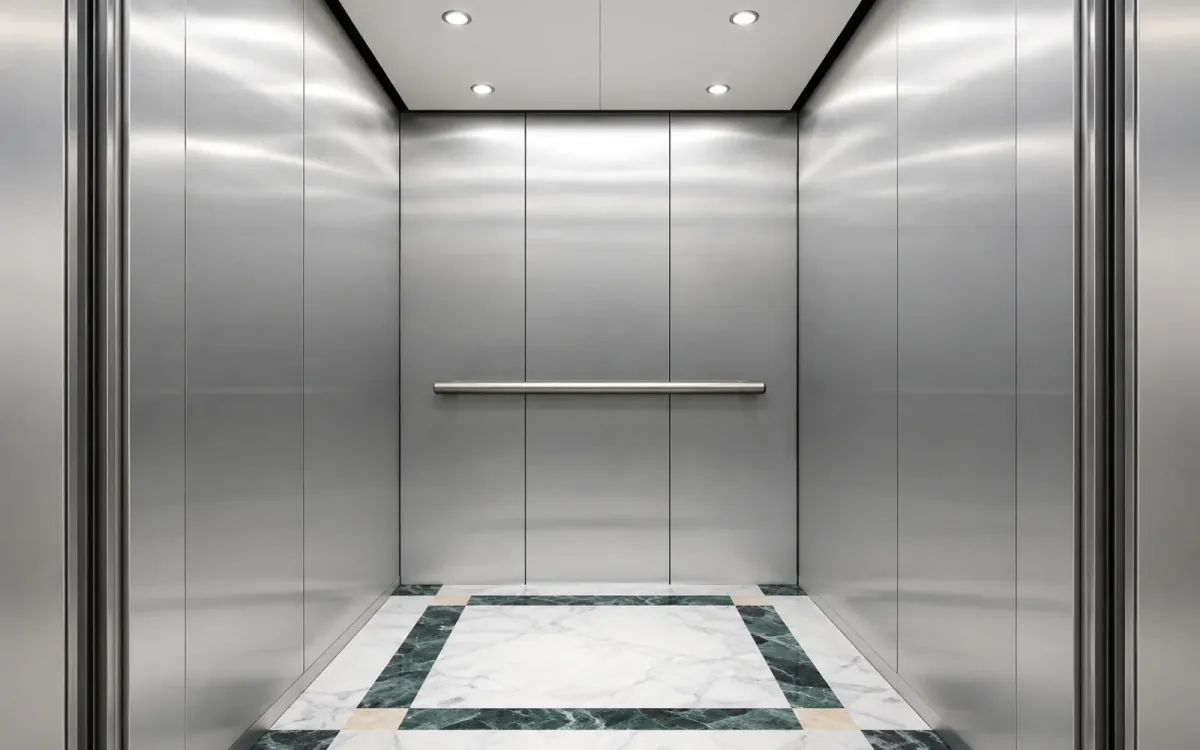
For a villa, apartment building, office or mixed-use property, discuss capacity, served floors, entrance arrangement, daily users and accessibility priorities before finishes. A machine-room-less or other arrangement is confirmed only after shaft, headroom, pit, structure, power and access information is reviewed. Cabin wall panels, floor, ceiling, lighting, handrails, operating panels and landing entrances should be scheduled together so the visual design remains compatible with the selected equipment.
- New villa and existing-home requirements
- Passenger flow and building operating pattern
- Entrance sides and clear route to every landing
- Cabin finish, controls and accessibility brief
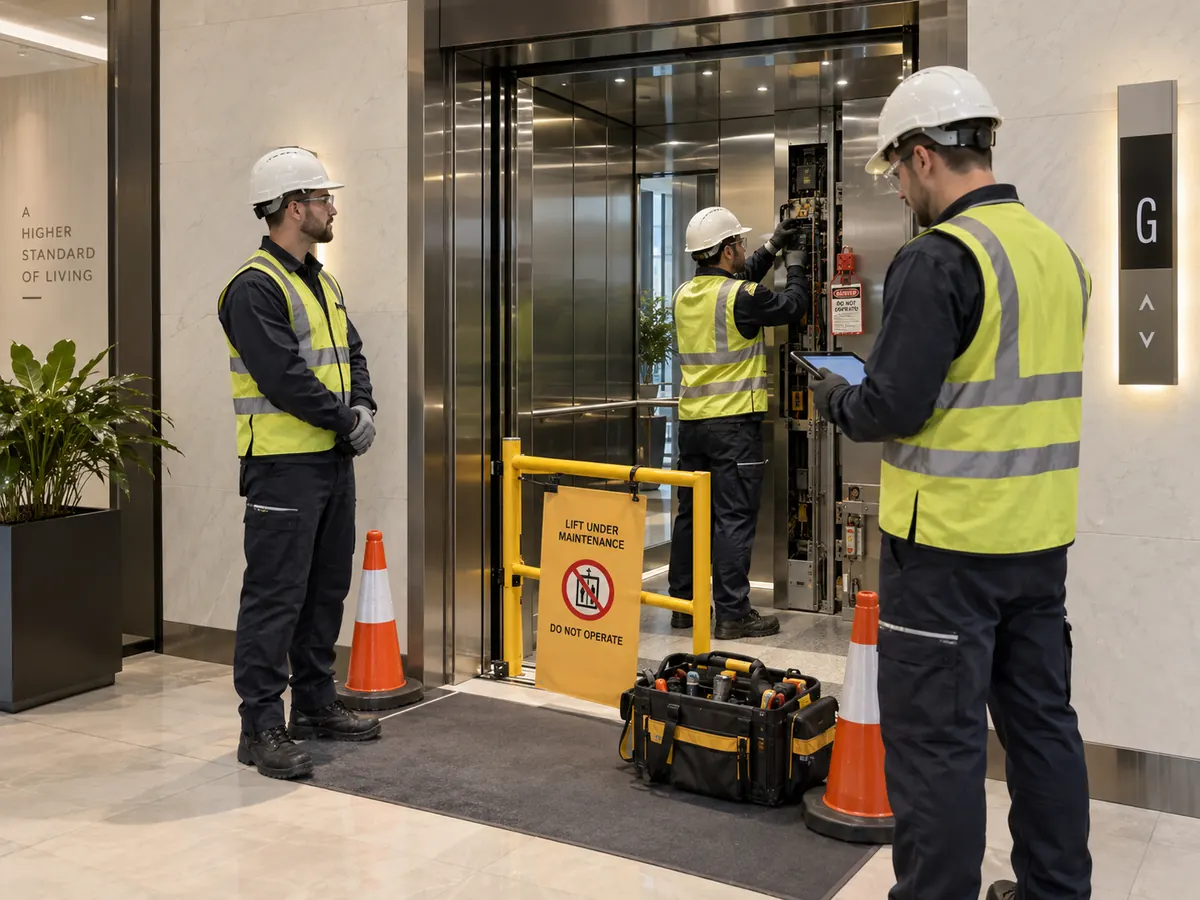
- Installation access, protection and handover records
Panoramic lifts join architecture to equipment.
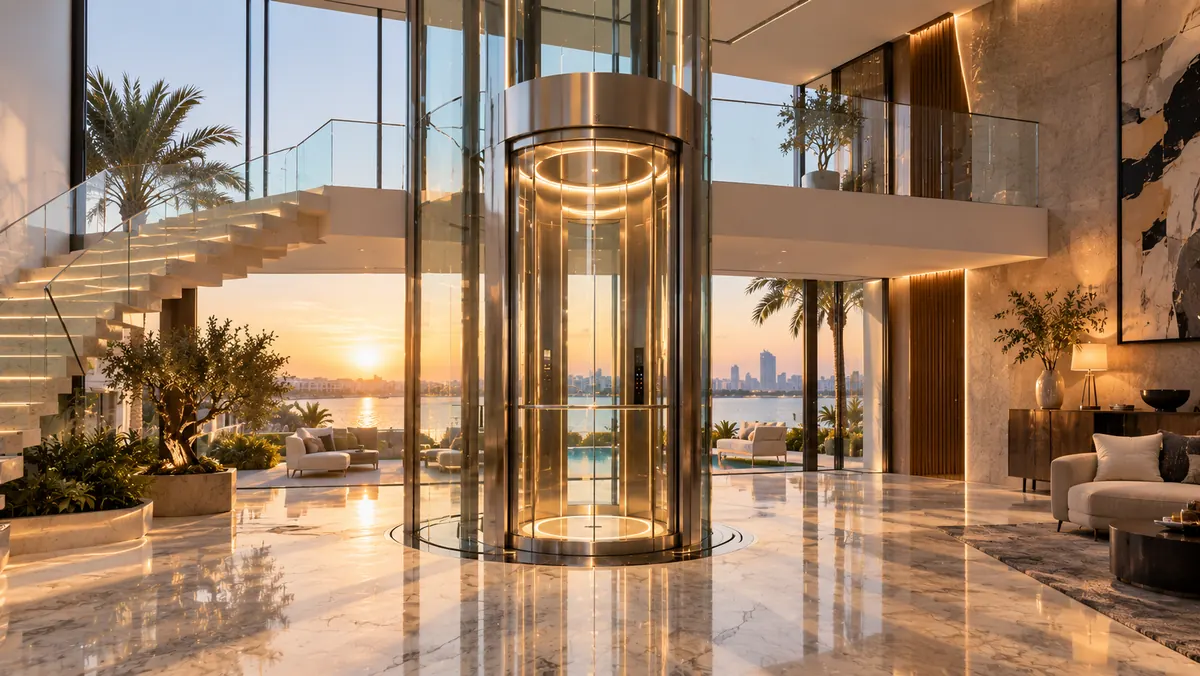
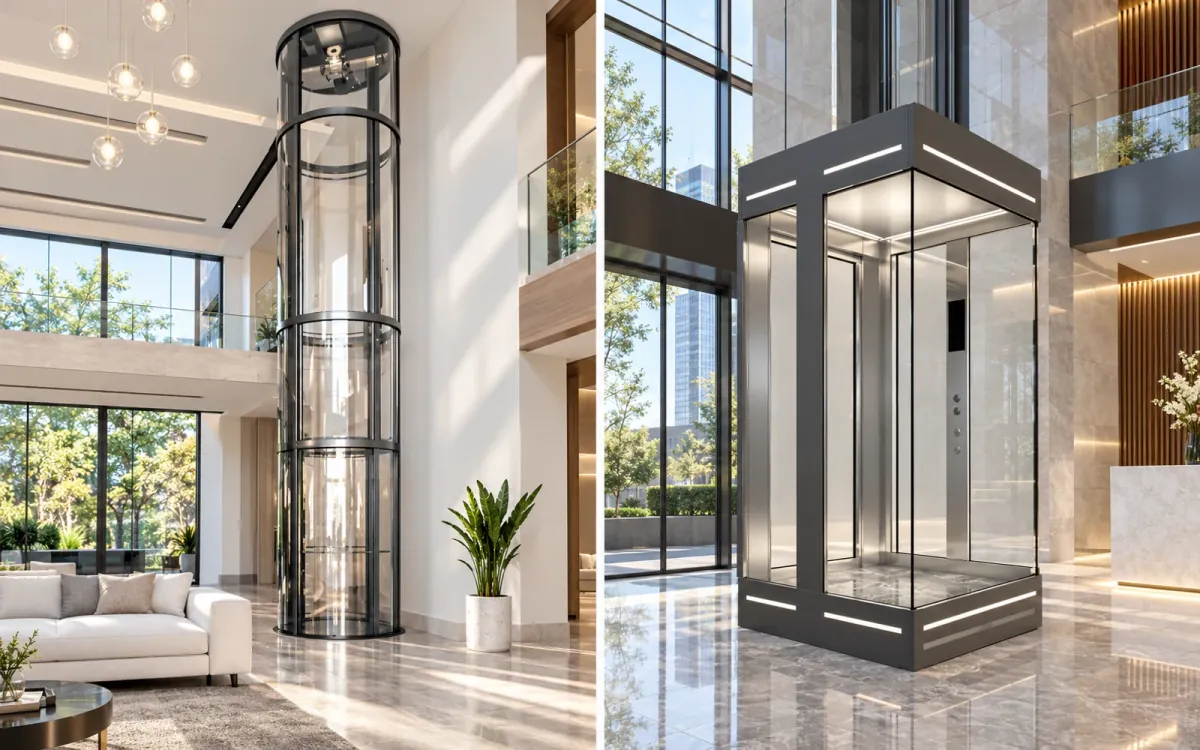
Round, semi-circular, square and other glazed concepts can become a strong feature in villas, hospitality spaces and public buildings. The visible enclosure, supporting structure, landing interfaces, solar exposure, cleaning access and maintenance access must be resolved with the architecture. Catalogue visuals communicate a design direction; they are not evidence that the same proportions, glass arrangement or finish will suit the surveyed building.
Hospital, freight, car and dumbwaiter duties are different.
A hospital lift discussion begins with bed and staff movement, route control, entrances, cleaning and operational continuity. Freight and car lifts require their intended goods or vehicles, loading method, entrance protection and traffic route to be defined. A dumbwaiter needs the service opening, landing positions, goods type, hygiene or operating environment and surrounding fit-out considered. Elevaya requests the use case and building information before confirming a Fuji model or preparing a quotation.
Escalators and moving walks require route-level planning.
For malls, transport environments, commercial buildings and other public routes, equipment selection depends on rise or travel length, inclination, width, expected flow, landings, barriers, interfaces and maintenance access. Movement around the equipment during installation and future service also matters. A catalogue visual cannot establish layout or compliance; project drawings, authority or consultant requirements and the surveyed route guide the proposal.
What Elevaya manages for a Fuji project.
Elevaya sources and supplies selected Fuji Japan equipment for its UAE projects, coordinates the design information, arranges installation and assembly within the agreed scope, supports testing and handover, and sets out the continuing maintenance plan. The written proposal identifies the exact manufacturer, equipment origin, model, options, documentation, warranty, delivery, building interfaces and aftercare. Elevaya does not describe itself as the manufacturer or an exclusive appointed distributor; the project relationship and supply route are stated in the proposal.
Multi-brand maintenance for the rest of your portfolio.
A property may combine a new Fuji installation with existing lifts or escalators from other international or Chinese manufacturers. Elevaya can survey the complete portfolio and prepare a coordinated maintenance, repair or modernization plan. Each asset is recorded by model, condition, technical access, documentation and parts route, giving the owner one clear service view across the building.
Request a project-specific Fuji proposal.
Send the UAE location, building type, project stage, number of floors, intended use, available drawings and preferred design direction. For an existing building, include photographs from safely accessible areas and any known shaft or equipment information. Elevaya arranges the technical survey, then issues a quotation covering the selected equipment, options, interfaces, responsibilities, programme, warranty and aftercare.
Questions, answered.
Does Elevaya sell and install Fuji lifts in the UAE?
Yes. Elevaya can supply selected Fuji Japan equipment and coordinate installation for suitable UAE projects. The model, configuration, documentation, programme and price are confirmed in the survey-led quotation.
Which Fuji products can be discussed?
The supplied range includes passenger and home elevators, panoramic or observation lifts, hospital, freight and car lifts, dumbwaiters, escalators and moving walks. Project suitability and current availability are confirmed individually.
Can these Fuji designs be tailored to my project?
Yes. The gallery presents design directions across relevant Fuji product families. Elevaya selects the appropriate model, dimensions, finishes and options around the surveyed building and confirms them in the written proposal.
Does Elevaya maintain other lift and escalator brands too?
Yes. Elevaya provides independent multi-brand maintenance, repairs and modernization for major international and Chinese systems used in the UAE. The survey confirms the service scope, technical access and parts route for each asset.
Elevaya develops every project around the surveyed equipment, building and agreed service scope.