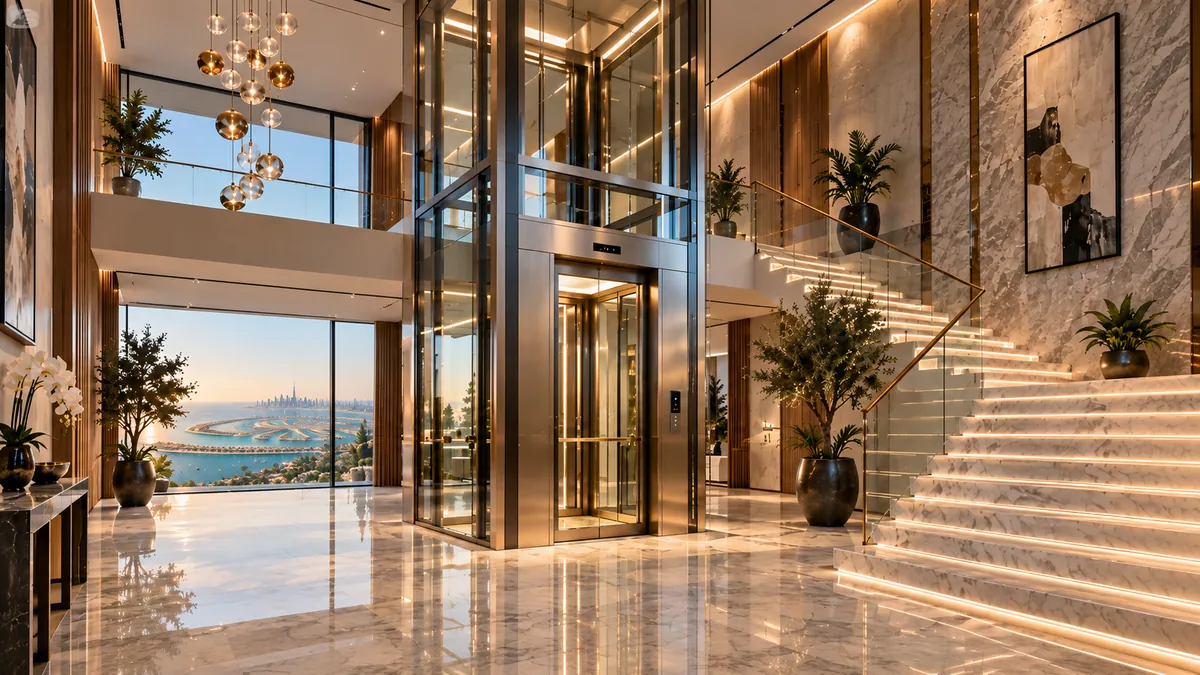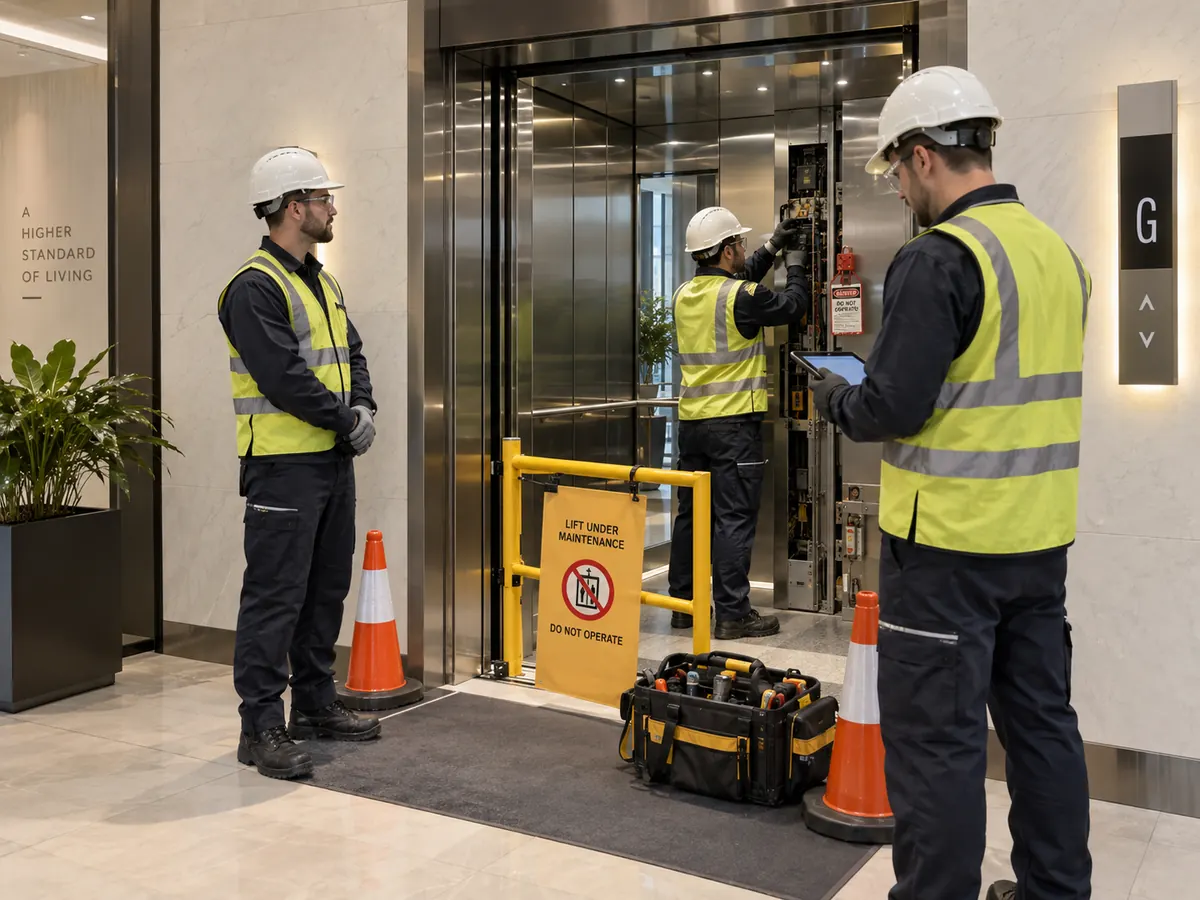
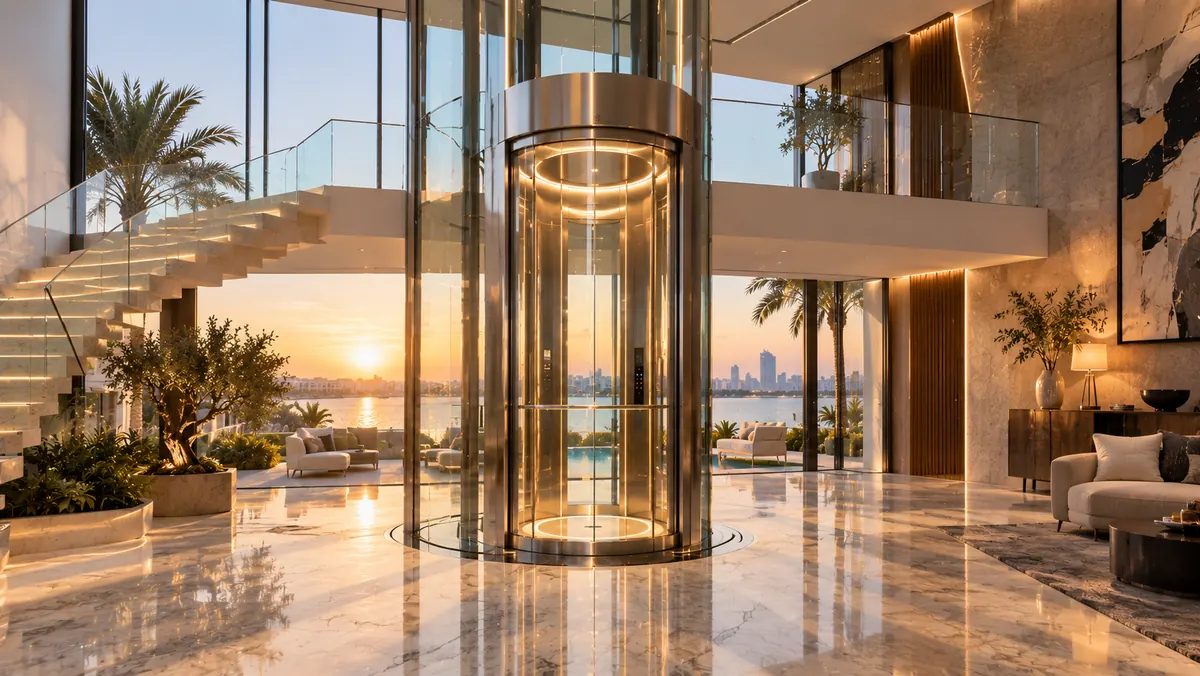
Confirm why the lift is outside.
Explain the floors, entrances, route and reason for the proposed external position. Note whether the lift serves residents, visitors, service movement or an accessibility objective. The position must work with rooms, landings, boundaries and circulation—not simply fit against a façade.
Treat exposure as a project requirement.
Sun, heat, wind, dust, humidity, coastal conditions and water paths can affect the enclosure, finishes and service strategy. The project team must assess site orientation and environmental conditions for the selected equipment. “Outdoor” is not a universal weatherproof specification.
Coordinate enclosure, drainage and structure.
Review the supporting structure, cladding or glazing, roof, thresholds, drainage, waterproofing and connections to each landing. Do not build an external shaft from generic dimensions. Equipment and enclosure drawings must be coordinated with the responsible architectural and structural design.
Plan access, privacy and façade appearance.
Consider views into and from the lift, neighbouring property, night lighting, cleaning and maintenance access. For panoramic or glass concepts, specify the design intent without assuming a particular glass build-up or thermal performance. Final materials follow the assessed design and approvals.
Coordinate municipality and property approvals.
Elevaya can coordinate municipality or relevant authority steps included in the written scope. Community, developer, landlord or consultant approvals may also apply. Each approving party controls its requirements; this page does not promise an approval outcome.
Prepare a technical survey pack.
Send the Emirate and exact site, building use, project stage, floors or travel, entrances, intended users or goods and the site contact. For existing equipment, add the manufacturer, model or asset number, current maintenance arrangement, available manuals and service reports, and a factual description of observed issues. Photographs and drawings help the team prepare, but they do not confirm dimensions, condition or suitability. Do not enter shafts, pits, machine areas or restricted equipment to collect information.
- Location, building use and responsible contact
- New project, existing equipment or replacement
- Drawings, asset details and records available
- Access, occupancy and shutdown constraints
- The outcome you need from the survey
Follow the project from decision to handover.
After the survey, the proposal should define accepted equipment, responsibilities, assumptions, exclusions, programme dependencies and the route for changes. Before work begins, confirm access, building interfaces, authority or consultant coordination and who approves additional work. At handover, retain equipment identity, agreed test or inspection records, operating information, warranty terms and maintenance arrangements. Elevaya does not offer an instant online price because these facts materially change the safe and commercial scope.
Include weather-related care in aftercare.
The AMC should identify the accepted equipment, enclosure interfaces, cleaning responsibilities, water observations, service access, reports and parts. Elevaya provides 24/7 service support, OEM parts where specified and available, and written warranty coverage defined in the contract.
Questions, answered.
Can an outdoor lift be added to an existing villa?
It can be assessed. Position, structure, landings, boundaries, exposure, drainage, power, access and approvals must be coordinated.
Is every glass lift suitable outdoors?
No. The selected lift and enclosure must be assessed for the project environment and building interfaces.
Who handles municipality approval?
Elevaya can coordinate authority steps included in the scope. The responsible authority and other approving parties determine requirements and approval.
Can you give an outdoor lift price from photos?
Photos help prepare a survey but cannot establish structure, exposure, interfaces or approval scope. Pricing follows the technical site survey.
Equipment suitability, service availability and site-specific requirements must be confirmed for each project.